August 11, 2026 • Margot Ellery • 9 min reading time • Prices verified June 13, 2026
Bassinet Mode, Pramette Mode, and Lie-Flat Seats: Setting Up Your Stroller for a Newborn
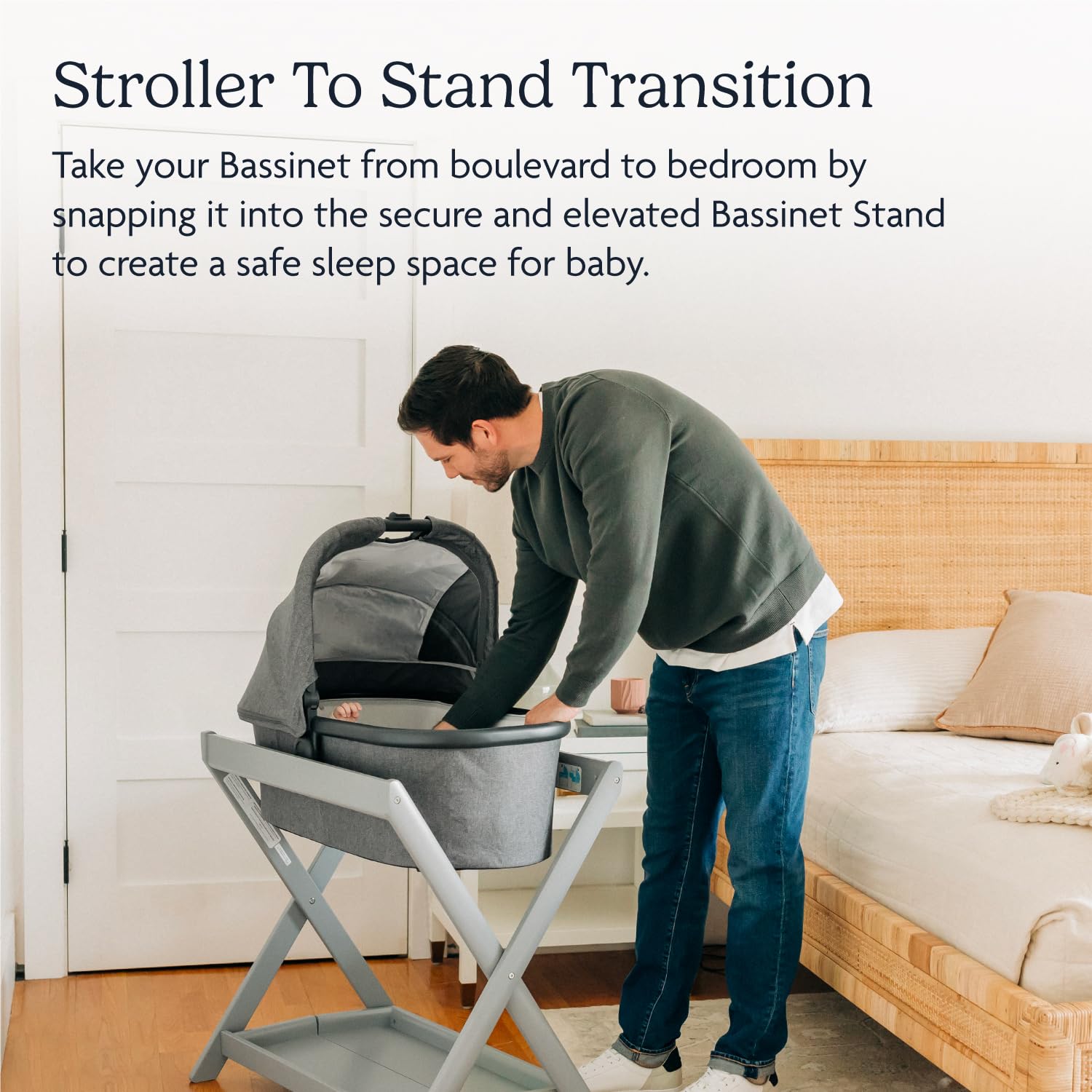
If you’ve just started stroller research, you’ve probably already noticed that the product listings use a lot of terms that nobody bothers to explain — “bassinet mode,” “pramette,” “lie-flat recline” — as though everyone already knows what they mean. They don’t, and that’s fine. Here’s the short version: newborns can’t hold their heads up, which means they need to ride completely flat (or very close to it) for the first several months of life. Not every stroller can do that right away. Some come with a separate carry-cot attachment — called a bassinet — that clips onto the chassis (the wheeled frame) and cradles the baby in a fully flat position. Others have a seat that reclines far enough to work for a newborn. And some need an add-on you’ll buy separately. Which setup you end up with affects your day-one experience, your budget, and — depending on the brand — how much of your stroller’s long-term ecosystem you’ll actually use. This guide walks you through each option, names the real tradeoffs, and ends with a clear decision rule.
| EDITOR'S PICKThule Bassinet | Mid-tierGraco Modes Pramette Stroller | Budget pickMompush Wiz 2 in 1 Baby Strolle… | |
|---|---|---|---|
| Newborn mode | Bassinet only | 3 modes | 2 modes |
| Seat reversible | — | ✓ | ✓ |
| Car seat use | — | Carrier (not incl.) | — |
| One-hand fold | — | ✓ | ✓ |
| Canopy | — | — | UPF 50+ |
| Color | Black | — | Khaki |
| Price | $299.95 | $249.99 | $159.99 |
| See on Amazon → | See on Amazon → | See on Amazon → |
Why the Flat Position Isn’t Optional
Before getting into configurations, it helps to understand why this matters medically, not just as a feature checkbox.
The American Academy of Pediatrics’ 2022 safe-sleep guidelines are explicit: infants under approximately six months should not spend extended time in a semi-reclined or bucket position, because their neck and airway muscles aren’t strong enough to self-correct if the head falls forward. In a seated or semi-upright stroller seat, a sleeping newborn can slump into a chin-to-chest position that partially obstructs the airway — a risk that gets amplified by a bumpy pavement or a long nap in transit.
“Flat or near-flat” is the standard target. For practical purposes, that means a recline angle at or below roughly 10–15 degrees from horizontal. Manufacturers state these angles on spec sheets; if a seat is described as reclining to “almost flat” or “near-flat” without a specific angle, it’s worth digging into owner reviews to see what that actually looks like in practice.
The good news: the premium stroller market has largely built this requirement into its product architecture. You’re not choosing whether to have a flat newborn option — you’re choosing which form factor delivers it, and at what cost and convenience tradeoff.
The Three Configurations, Named and Compared
1. Dedicated Bassinet (Carry-Cot) Mode
A bassinet — sometimes called a carry-cot or pram body — is a separate enclosed sleeping unit that attaches to the stroller chassis in place of the regular seat. The baby lies inside it, fully flat, typically with padded sides and a hood. Think of it as a portable crib that happens to click onto wheels.
Who uses this approach: Bugaboo Fox 5, UPPAbaby VISTA V2, Stokke Xplory X, Silver Cross Balmoral, Nuna MIXX Next. These brands treat the bassinet as the proper newborn chapter of the stroller’s lifecycle, with the seat unit taking over around six months.
The tradeoffs, named explicitly:
-
Included vs. separate purchase: This is the biggest variable. On the UPPAbaby VISTA V2 (
$1,100 retail), the bassinet is included in the box. On the UPPAbaby Cruz V2 ($700), it’s a $200 add-on. On some Bugaboo configurations, the carry-cot is bundled depending on the retailer package. Always verify what’s actually in the box before comparing sticker prices — a $700 stroller requiring a $200 bassinet isn’t cheaper than a $900 bundle. -
Overnight sleep approval: Some bassinets are specifically tested and rated for overnight sleep; many are not. The Bugaboo Fox 5 carry-cot and the UPPAbaby VISTA bassinet are among those marketed with overnight sleep capability (per their respective manufacturer documentation). The Silver Cross Balmoral, as a traditional coach-built pram, is designed from the ground up for extended sleep. If you’re planning to use the bassinet as a nap location at home, check whether it’s explicitly rated for that — not all are.
-
Resale value behavior: Bassinets age out of use quickly (typically four to six months of active use), but they hold surprising resale value on platforms like GoodBuy Gear and Facebook Marketplace because parents buying used strollers often need to source the bassinet separately. A well-maintained UPPAbaby VISTA bassinet regularly sells for $80–$130 used, which partially offsets the original cost.
2. Pramette Mode
“Pramette” is a term used primarily by European and British brands — you’ll encounter it most often with Bugaboo, Silver Cross, and iCandy — to describe a configuration where the stroller seat unit itself reclines to a flat or near-flat position, facing the parent, functioning like a pram (a traditional British baby carriage). The seat doesn’t become a bassinet, but it reclines far enough to meet the flat-position requirement.
Which? (the UK consumer testing organization) notes in its pushchair review coverage that the distinction between a true pram-mode and a deeply reclining seat has blurred significantly in recent years, and that parents should verify the actual recline angle rather than relying on the “pramette” label alone.
The practical advantage: You’re not managing two separate units — the bassinet and the seat — which means fewer attachment points to learn, less gear to store, and a simpler transition. The Bugaboo Cameleon and some iCandy configurations use this approach.
The practical disadvantage: The enclosure and padded depth of a dedicated bassinet is generally better for extended naps — the sides create a more womb-like environment. A reclined seat, even fully flat, is more exposed and typically less padded at the sides. For parents planning long daily walks with a newborn who sleeps in the stroller, this is worth factoring in.
3. Lie-Flat Seat (Inline or Convertible)
Some strollers — particularly those positioned as “travel system” or “all-in-one” options — don’t offer a separate bassinet but advertise a seat that reclines nearly flat. This is the most variable category, and it’s where the most confusion (and occasional marketing stretch) lives.
BabyGearLab’s stroller review methodology specifically evaluates recline angle as a scored criterion, and their coverage consistently notes that “near-flat” can mean anything from 160 degrees (genuinely adequate) to 140 degrees (marginal for younger newborns). Wirecutter’s stroller coverage makes a similar point: the lie-flat label on a seat should be verified against the published spec, not taken as a categorical guarantee.
When this configuration works well: If you’re pairing the stroller with an infant car seat via a click-in adapter (so the baby rides in the car seat shell on the stroller frame for the first four to five months), the seat’s recline angle becomes less urgent in early weeks. Many parents effectively use the car seat adapter as their “newborn mode” and transition to the stroller seat around four to five months when the baby has more head control. This is a legitimate strategy — just make sure to check adapter compatibility for your specific car seat and stroller model year.
By the Numbers
| Configuration | Typical additional cost | Newborn-ready from day one? | Transition age (approx.) |
|---|---|---|---|
| Included bassinet | $0 (bundled) | Yes | ~6 months |
| Add-on bassinet | $150–$350 | Yes, once purchased | ~6 months |
| Pramette seat mode | $0 | Yes (verify angle) | Seat continues in use |
| Lie-flat seat | $0 | Marginal–adequate | ~4–6 months |
| Car-seat adapter only | $50–$100 | Yes (via car seat) | ~4–5 months |
The Ecosystem Angle: What You’re Actually Buying Into
If you’re deep enough into your stroller research to be reading about newborn configurations specifically, you’re probably also thinking about longevity — how long this chassis serves you, and what accessories extend it. This is where the bassinet vs. pramette decision has downstream consequences.
Brands built around the bassinet model — Bugaboo, UPPAbaby, Stokke — have rich accessory ecosystems: footmuffs sized for the bassinet, bassinet-specific rain covers, mosquito nets, and travel bag compatibility. The Stokke Xplory X, for instance, has bassinet accessories that are designed around that unit’s specific dimensions and attachment points, and they don’t carry over to the seat. You’re essentially buying into two phases of outfitting, not one.
The Bump’s buying guide notes that parents frequently underestimate total accessory spend and that bassinet-specific accessories can add $100–$250 to first-year costs on premium strollers.
Pramette-mode strollers tend to have simpler accessory ecosystems — fewer phase-specific attachments — which can be a genuine simplicity advantage or a limitation depending on your climate and how much time the baby spends outdoors in the stroller.
The Decision Rule
If you’re currently sitting with a decision pending — stroller in the cart, bassinet add-on in a separate tab, trying to figure out what you actually need — here’s the honest framework:
If your baby will spend significant time sleeping in the stroller in the first six months (long daily walks, urban parents who don’t have a yard, parents relying on motion sleep), invest in a proper bassinet, preferably one rated for extended or overnight sleep if your brand offers that distinction. The enclosure and flat position are genuinely better for extended naps than a reclined seat. On VISTA V2, it’s bundled. On Cruz V2, budget the add-on.
If you’re planning to use an infant car seat clipped to the frame for the first four to five months (common with travel-system setups or shorter daily outings), a lie-flat seat or pramette mode is probably sufficient and saves you the bassinet cost and storage footprint. Verify the recline spec is at or below 15 degrees from horizontal.
If you’re buying a coach-built pram — Silver Cross Balmoral, a traditional Emmaljunga, or similar — the question is already answered. You’re buying the flat-sleep form factor as the primary product; the seat comes later, if at all.
If you’re a gift-buyer choosing between bundles: the version with the bassinet included is almost always the right call. It removes a sourcing step for new parents, it’s one cohesive gift, and the brands that include bassinets in the box (UPPAbaby VISTA V2, Bugaboo Fox 5 in some configurations) are specifically acknowledging that the newborn chapter matters enough to architect around. That’s a reasonable proxy for overall product thoughtfulness.
One final note on the sourcing side: bassinet compatibility is model-year-specific on some chassis. The Bugaboo Fox 5 carry-cot is not interchangeable with the Fox 3 without an adapter, and similar version-lock exists across the category. If you’re buying the chassis new and the bassinet used (or vice versa), confirm compatibility by model year before completing the purchase. It’s the kind of detail that doesn’t surface until checkout — and by then it’s too late.