September 7, 2026 • Margot Ellery • 9 min reading time • Prices verified June 13, 2026
Single-to-Double Strollers That Actually Grow With Your Family (Without Costing a Fortune)
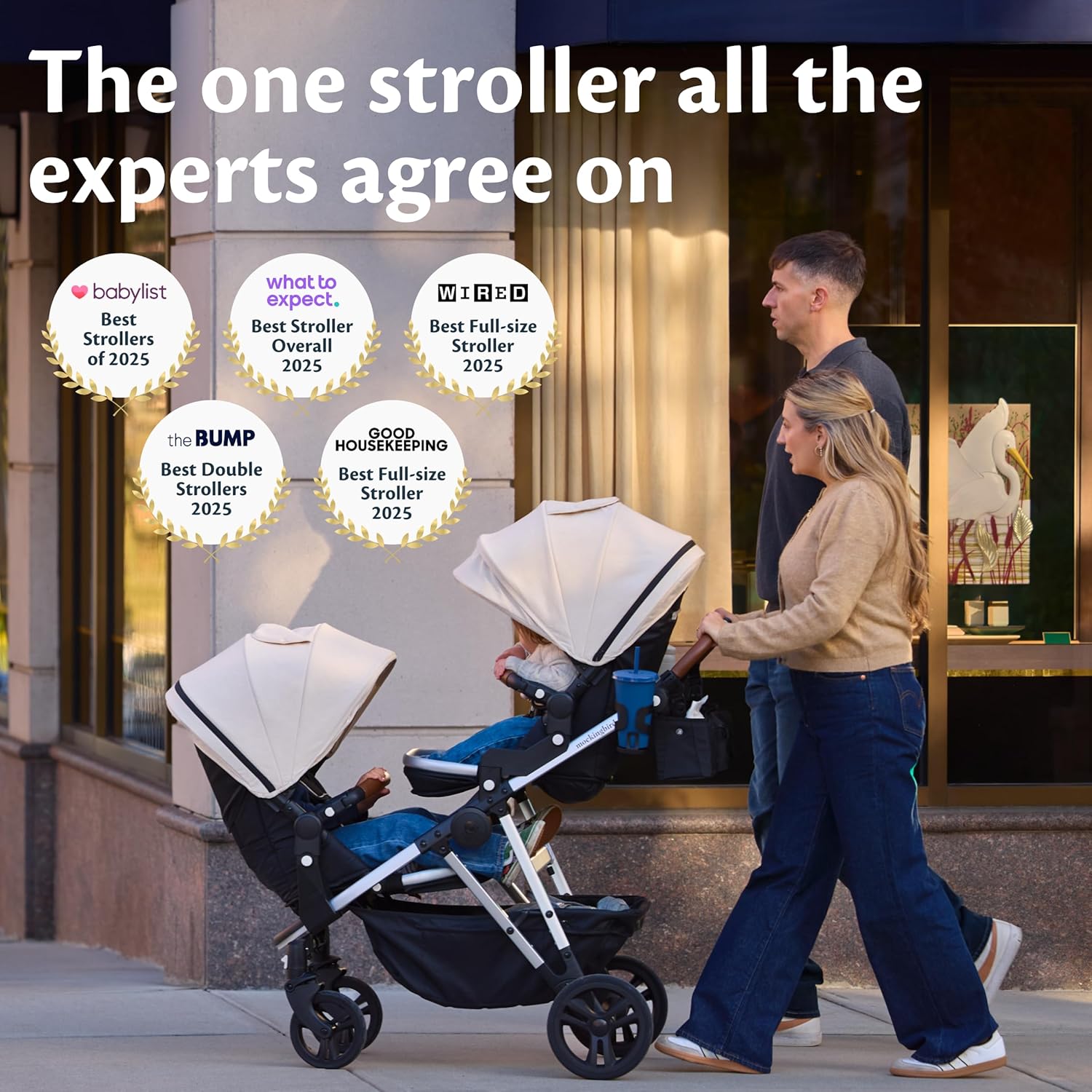
Here’s something nobody warns you about when you’re pregnant with your first baby: the stroller you pick has to last longer than a single-child phase of your life. Most parents don’t think about baby number two during that first frantic research sprint — but the parents who do think about it early tend to save themselves somewhere between $600 and $1,400 by not having to start over. A convertible single-to-double stroller is exactly what the name sounds like: a stroller that works perfectly for one child, and then — when a sibling arrives — expands to carry two kids at the same time, usually by adding a second seat or a ride-along platform (a small board or seat that clips to the frame and lets a toddler stand or sit behind the primary seat). This guide is for parents who are already past the basics — you know what a chassis is, you’ve heard the terms “modular” and “tandem” — and who now need a clear decision framework, not another spec table that leaves you more confused than when you started.
What “Expandable” Actually Means — and Why the Details Matter
Not all convertible strollers expand the same way. There are three meaningful configurations in this category:
1. True modular doubles — the frame physically accepts a second full seat on a separate mounting point. The UPPAbaby VISTA V2 (around $1,100) and the Bugaboo Fox 5 (around $1,400) both work this way. When a sibling arrives, you purchase a second seat (often called a “rumble seat” or just a second seat kit) and it clicks onto a bracket above or below the first. Both children get a real seat. Neither is perched awkwardly. Reviewers at Wirecutter consistently identify this setup as the most comfortable long-term solution, particularly when kids are close in age and both still nap on the go.
2. Tandem + ride-along board systems — the primary seat stays where it is, and an older toddler (typically 2.5 and up) steps onto a footboard or small foldable seat that attaches to the back of the frame. The UPPAbaby Cruz V2 ($700) and the Nuna MIXX Next ($800) can add a ride-along board this way. It’s meaningfully cheaper than a full second seat, but honest reviewers on The Bump note that a tired three-year-old who needs to sleep is not going to nap standing up on a board — you’ll wish you had a second actual seat faster than you expect.
3. Chassis-only expandables with proprietary seat systems — this is where it gets complicated. Some brands sell an expandable frame but require you to use only their own second seat, and sometimes only in a specific configuration (one forward-facing, one rear-facing, or stacked vertically in a “tandem” layout). The limitation sounds fine until you realize the second seat adds 8–12 lbs to an already substantial chassis and makes the footprint so long that it won’t clear a standard doorway without a 45-degree shimmy.
The practical question to ask before buying: “When both seats are installed, what is the total stroller weight and what is the length front-to-back?” Owners consistently report that anything over 32 lbs fully loaded becomes genuinely painful on stairs, and a tandem that runs past 46 inches front-to-back starts to feel like parallel-parking a compact car through a restaurant doorway.
The Models Worth Comparing Right Now
Here’s where the mid-to-premium field shakes out for families actively making this call in mid-2026.
UPPAbaby VISTA V2 (~$1,100 chassis + ~$350 RumbleSeat)
The VISTA V2 remains the most-recommended expandable stroller in editorial coverage because the expansion actually works. BabyGearLab’s double stroller coverage consistently ranks the VISTA’s two-seat configuration among the top performers for ride quality and maneuverability, noting that the wide front wheel base prevents the nose-heavy tipping problem that plagues cheaper expandables when a toddler sits up high.
The honest tradeoffs: at 26.4 lbs before you add the second seat, this is a heavy push as a single stroller for a parent who rides public transit or lives in a walkup. And UPPAbaby’s ecosystem lock-in is real — the RumbleSeat works beautifully but isn’t cheap. If you’re buying a VISTA specifically to hedge against a second child, that’s the right call. If a second child is genuinely hypothetical and might never happen, you’re carrying both the price and the weight premium for coverage you may never need.
Resale signal: GoodBuy Gear’s 2025–2026 secondary market data puts the VISTA V2 at roughly 55–65% of original retail on resale, which is strong. Popular colorways (Greyson, Declan) hold closer to the top of that range.
Bugaboo Fox 5 ($1,400) + Bugaboo Dual Extension ($500+)
The Fox 5 is the better push in this category — owners who’ve switched from other strollers consistently describe the suspension and steering as noticeably more fluid over rough pavement. The Fox 5 supports a second seat via the Bugaboo Dual Extension Kit, which converts it into a tandem with both children seated at a similar height rather than stacked high/low, which parents find more socially comfortable (neither child feels “demoted”).
The tradeoff here is total cost. A Fox 5 configured for two children is comfortably a $1,900 outlay before you’ve bought adapters or a bassinet. For a family that’s certain about a second child and values longevity, the per-year cost math actually pencils — reviewers at Wirecutter note that Bugaboo chassis tend to perform through 4+ years of daily use. For a family that’s uncertain, it’s a steep hedge.
Nuna MIXX Next (~$800) + MIXX Ride-Along Board
The MIXX Next is the most intelligent choice if your situation is: “first child is 2+ years old, second baby is coming, and I need the second slot for the infant, not the toddler.” You put the newborn in the MIXX’s primary seat (or pair it with the PIPA infant car seat, which snaps in without an adapter), and the older toddler steps onto the ride-along board. The Bump’s convertible stroller coverage flags the MIXX Next as a standout for one-handed steering and compact fold — both of which matter when you’re doing this solo.
The ceiling of this approach is real, though. Once the older child is tired or it’s raining and you want both kids contained, the board isn’t enough. Parents who’ve tried the board-only route through a second winter often end up buying a dedicated double stroller anyway. Know that going in.
Stokke Xplory X (~$1,500) and the Two-Child Question
The Xplory X deserves an honest note here because it’s a stroller this readership considers seriously. Its elevated seat design — the signature high-up seating position that puts baby at conversation height — does not lend itself well to a second-child expansion. Stokke sells a sibling board, but at the Xplory X’s frame height, the board sits at an awkward elevation for toddlers who aren’t tall yet. Parents who bought the Xplory X for its aesthetic and social design intent generally pair it with a purpose-built double for the infant phase, or transition the Xplory X to secondary use. It is a magnificent single stroller. It is not where you’d invest if expandability is the primary brief.
By the Numbers
| Model | Starting Price | Weight (single) | Second child solution | Est. resale (% of retail) |
|---|---|---|---|---|
| UPPAbaby VISTA V2 | ~$1,100 | 26.4 lbs | RumbleSeat (~$350) | 55–65% |
| Bugaboo Fox 5 | ~$1,400 | 22.7 lbs | Dual Extension Kit (~$500+) | 50–60% |
| Nuna MIXX Next | ~$800 | 23 lbs | Ride-along board (~$150) | 45–55% |
| UPPAbaby Cruz V2 | ~$700 | 20.5 lbs | PiggyBack board (~$150) | 40–50% |
Resale estimates based on GoodBuy Gear and eBay sold listings, Q4 2025–Q1 2026. Lighter colorways and current model-year units hold value better.
The Compatibility Trap Nobody Talks About
Here’s where a lot of parents get burned: they buy the expandable stroller, then discover that the infant car seat they already own — or already love — doesn’t fit without a $60–$90 adapter that takes weeks to ship, or in some configurations doesn’t fit at all.
Nuna’s ecosystem is notably self-contained: the MIXX Next is designed to work most smoothly with Nuna’s own PIPA series infant seats. UPPAbaby publishes a more open adapter list and is compatible with Chicco, Maxi-Cosi, and Nuna car seats with the right adapter kit. Bugaboo’s compatibility list is broad but requires careful model-year matching — a Bugaboo Fox 5 adapter purchased for a 2023 Maxi-Cosi Mico may not fit a 2025 Mico without confirmation.
Per BabyGearLab’s stroller compatibility coverage: always verify the exact model year of both the stroller and the car seat before purchasing an adapter. Model-year mismatches are the single most common source of fitment failures in this category, and a gray-market seller won’t flag them for you.
The Decision Rule
If you’re sitting with this decision right now, here’s the clean version:
If a second child is confirmed or likely within three years → The UPPAbaby VISTA V2 is the lowest-regret choice at the mid-luxury tier. The two-seat configuration is genuinely functional, the resale is strong, and the ecosystem (bassinet, car-seat adapters, RumbleSeat) is the most documented and widely available. You’re paying for optionality, and the optionality is real.
If a second child is possible but uncertain, and you want to spend closer to $800 → The Nuna MIXX Next gets you a premium single with solid infant car-seat integration and a board option for a toddler. Buy it knowing you might buy a dedicated double later. That’s not a failure of planning — it’s an honest hedge.
If design and ride quality are the primary brief and budget is flexible → The Bugaboo Fox 5 is the better push, full stop. The expansion is more expensive, but owners who’ve used both report the difference in maneuverability is meaningful over four years of daily use. Justify it on longevity and resale, not just aesthetics.
If you’re deep in the Stokke ecosystem or buying primarily for the design statement → Buy the Xplory X as a single and plan for a purpose-built tandem when the sibling arrives. Don’t force a stroller designed around a singular aesthetic brief to do a job it wasn’t designed for.
The stroller market in mid-2026 has never had more modular options in this price range, and manufacturers have gotten genuinely good at making expansion feel like a feature rather than an afterthought. The families who get the most out of these systems are the ones who named the tradeoffs early — and bought accordingly.