September 16, 2026 • Margot Ellery • 10 min reading time • Prices verified June 13, 2026
Disney and Theme Park Strollers: What Real Parents Bring and Why
Disney and Theme Park Strollers: What Real Parents Bring and Why
You’ve probably seen the photos: a sea of strollers parked outside Fantasyland like a very orderly traffic jam. A theme park visit with a young child is essentially a multi-mile urban hike with a tired toddler, a diaper bag the size of a carry-on, snacks for an army, and the ambient pressure of getting your money’s worth. The stroller — that wheeled seat-and-storage system that carries your child and everything they need — becomes your command center for the entire day. Get the rig wrong, and you’re fighting folded-down canopies, security-screening delays, and doorways that refuse to accommodate your frame. Get it right, and the stroller practically disappears into the background while you actually enjoy the park.
This guide is for parents who have been to a theme park or are about to go for the first time with a stroller, and who want a real answer to the question: what should I actually bring? We’ll cover stroller sizing rules, the double-stroller dilemma, the accessories that make a difference, and the math on renting versus owning.
Disney’s Stroller Rules (and Why They Matter More Than You’d Think)
Disney parks — Walt Disney World and Disneyland specifically — have published stroller size restrictions that are worth knowing cold before you pack anything. Per WhatToExpect.com’s editorial guidance on Disney park policies, strollers must be no larger than 31 inches wide and 52 inches long to be permitted in the parks. That single rule eliminates a surprising number of popular double strollers, particularly side-by-side configurations where two seats sit next to each other rather than one in front of the other (called a tandem layout).
This matters practically: a side-by-side double stroller is often 30+ inches wide before accessories are clipped on. Add a cup holder and a snack tray and you’re squeezing through attraction queues and shop doorways sideways. Disney’s indoor corridors, gift shops, and especially older attraction queue lines were not designed with wide-body strollers in mind.
By the numbers:
- Disney’s published width limit: 31 inches
- Typical side-by-side double: 28–33 inches wide
- Typical tandem double: 20–25 inches wide
- Disney stroller rental (2025–2026 rates): ~$36/day single, ~$52/day double (per published Walt Disney World pricing)
Tandem vs. Side-by-Side: The Configuration Tradeoff
If you’re bringing two kids to a theme park, this is the most consequential decision you’ll make. Here’s the honest tradeoff.
Side-by-side doubles give both children an equal sightline and equal parent access. Neither child is “the back seat kid.” But as BabyGearLab’s published analysis of double stroller configurations notes, width is a persistent real-world problem — not just at Disney, but anywhere with narrow doorways, crowded aisles, or tight elevator banks. At a park, that problem compounds across a hundred micro-navigation moments during the day.
Tandem doubles (one child in front, one behind, like train cars) solve the width problem cleanly. The Chicco Cortina Together’s tandem layout gets repeated praise from owners specifically because it fits through standard doorways — something that sounds mundane until you’re at the fourth crowded attraction exit of the day and your side-by-side is causing a log jam. That practical feedback from owners isn’t incidental; it reflects a genuine feature advantage in park environments.
The Graco Ready2Grow 2.0 is another tandem double that comes up frequently in park-context reviews. Owners report it handles crowd navigation better than its size might suggest, though some note that the rear-facing options make it longer overall, and tight midway crowds — particularly in areas like Disney’s Fantasyland during peak hours — require patience at pinch points. It’s not a nimble stroller, but owners who prioritize storage and versatility over agility consistently find it worth the tradeoff.
The decision rule: If you have two kids under four and you’re going to a major theme park, default to a tandem configuration unless your children are close enough in age and temperament to share a bench-style seat. Width causes more friction over a ten-hour day than any other single configuration variable.
Single Strollers: What Experienced Park Parents Actually Roll With
For one child, the universe opens up considerably — but experienced park parents have strong opinions about which features earn their keep over a long day.
Compact fold and carry weight matter more at a theme park than almost anywhere else. You will fold this stroller more times than you expect: boarding and deboarding buses or trams, entering some attractions, storing at a restaurant, loading into a car at the end of an exhausted day. Parents.com’s editorial evaluation of the umbrella stroller category consistently surfaces weight as the primary complaint of parents who regret their park choice. A stroller that weighs 25+ pounds becomes a burden by hour six.
True umbrella strollers — lightweight, collapsing with a simple pinch-and-fold into a narrow upright form — typically run 11–18 pounds. They sacrifice storage, recline depth, and wheel quality. That’s a real tradeoff, not a marketing footnote. An umbrella stroller on uneven pavement or cobblestone (a common texture at Disney’s Hollywood Studios or EPCOT’s World Showcase) will shake and rattle more than a stroller with larger, air-filled wheels.
The practitioner’s take: a mid-weight stroller in the 18–23 pound range with a one-hand fold (meaning you can collapse it while the other hand holds your child) and a decent underseat basket is the practical sweet spot for most single-child park visits. Pure umbrella strollers are genuinely worth considering only if you have a child over three who may walk significant portions of the day and you’re using the stroller as a backup rest vehicle rather than a primary carrier.
One owner note worth surfacing from aggregated reviews: the Baby Trend Sit N’ Stand DLX gets points in park contexts specifically because of its stand platform — a flat rear deck where an older child can stand and ride. One documented owner use case involves rigging the stand platform with a bungee cord and a soft-sided cooler for a Disney visit. That’s a real-use improvisation that signals how experienced park parents adapt gear to their actual needs rather than relying on a purpose-built park stroller.
The Accessories Layer: What Actually Stays Attached All Day
This is where the practitioner knowledge concentrates. Everyone has opinions about stroller organizers; fewer people have opinions based on a ten-hour day at a park with security screening, sun exposure, and repeated fold-unfold cycles.
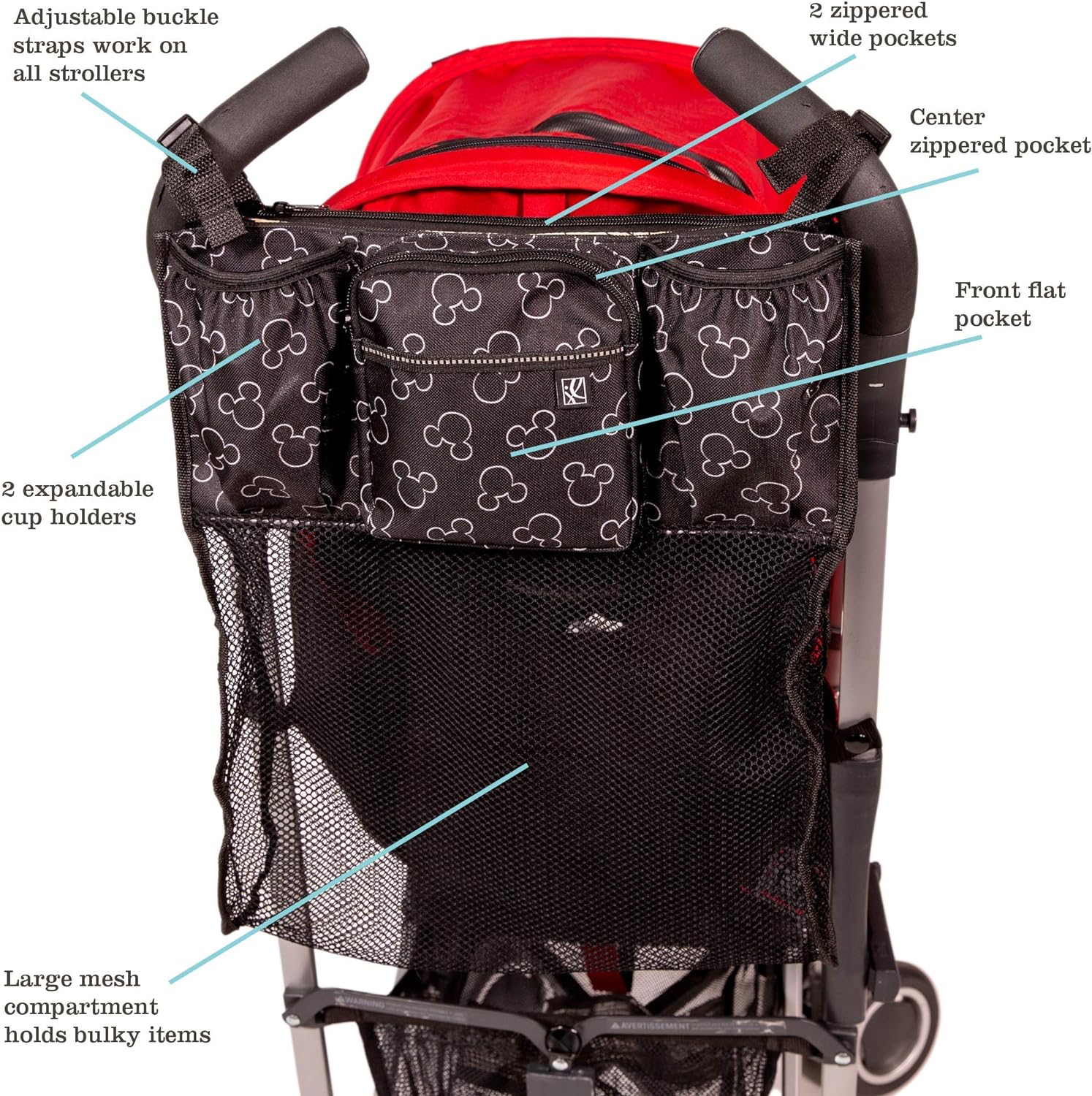
The J.L. Childress Disney Bag Caddy has become something of a known quantity among park-experienced parents, and for a specific reason: owners confirm that the mesh construction allows the bag to pass Disney security screening without being removed from the stroller. That’s not a minor convenience — at a park where security checkpoints involve staff visually inspecting bags and stroller storage, an opaque organizer creates a friction point (and sometimes a full-removal request) that slows your entry. Reviewers in the Disneyland context specifically call this out as a functional advantage over solid-panel organizers.
The Accmor organizer gets a specific Disneyland trip mention in owner reviews: reported to have stayed attached all day without interfering with the stroller’s fold. That’s a relevant durability signal. Many clip-on accessories look sturdy in an Amazon photo and perform poorly under the mechanical stress of repeated folding, sun expansion, and the vibration of park pavement.
A cautionary contrast: owners of the Momcozy organizer in clip-on cup holder configurations report breakage after very few uses, with consistent complaints about shaking and instability while moving. If the primary failure mode of a park accessory is that it vibrates loose or snaps under light use, it’s not suited for a park day where you’re moving constantly and can’t afford to chase a cup holder across a crowded midway.
Practical accessory stack for a park day:
- A mesh caddy that passes security visually (J.L. Childress caddy fits this role)
- A clip-on fan rated for stroller attachment (check that the clip fits your handlebar diameter)
- A universal rain cover if the forecast is uncertain — Florida weather in particular moves fast
- A sun shade extension if your canopy UPF coverage is minimal
Skip: heavy snack trays that require two hands to fold around; rigid organizers that block the underseat basket; any accessory with an exclusively friction-based clip attachment (those don’t survive park conditions).
Rent or Bring? The Honest Math
Disney’s stroller rental program exists, and for some families it genuinely makes sense. The rental strollers are sturdy, identifiable (which matters when you return to a stroller parking area and every blue frame looks the same), and the cost is absorbed into the trip budget.
Bring your own if: You have a child with specific positioning or comfort needs, you’re staying multiple days (the daily rental cost adds up fast), you need a double stroller, or you have a stroller your child already knows and will settle into for naps.
Rent if: You’re flying to the park and don’t want to gate-check a stroller, you have a child over two who may walk significant portions of the day, or it’s a one-day visit and your home stroller is large and difficult to transport.
Per The Bump’s editorial roundup on Disney stroller picks, the parents most likely to regret bringing their own stroller are those who fly to the destination and gate-check a premium stroller they’re anxious about — gate-check bags help, but anxiety over a $1,200 chassis getting mishandled is a real tax on enjoyment. If that’s your situation, either rent or bring a dedicated travel/park stroller that you’re not emotionally invested in protecting.
Frequently Asked Questions
Does the Disney J.L. Childress caddy actually pass Disney security screening without being removed? Based on aggregated owner reports from Disneyland and Walt Disney World visits, yes — the mesh construction allows security staff to visually inspect the contents without requiring removal. This is the single most cited functional advantage of the design in park-specific reviews.
Is a tandem double stroller or side-by-side better for crowded theme parks? Tandem, consistently. Width is the operative constraint, and tandems fit through standard doorways and tight queue corridors that side-by-sides regularly struggle with. The Chicco Cortina Together’s tandem layout is specifically praised by owners for this reason.
Can the Graco Ready2Grow 2.0 navigate tight midway crowds at Disney? It can, but owners are candid that it requires patience at peak-crowd pinch points. It’s a capable tandem double with good storage, but it isn’t an agile stroller. Plan for slower navigation through congested areas.
What organizer accessories do experienced Disney parents add beyond a basic caddy? The practical additions are: a clip-on fan (for Florida or Southern California heat), a universal rain cover, and a stroller hook for hanging additional bags. Experienced parents also recommend a stroller ID tag or ribbon to distinguish your frame in stroller parking areas.
Should I rent a stroller at Disney or bring my own compact travel stroller? Rent if you’re flying in and don’t want to gate-check, or if it’s a one-day visit. Bring your own if you’re staying multiple days (rental costs compound), need a double, or have a child with specific comfort or positioning needs.
Which umbrella strollers are light enough to carry through a park all day without checking? True umbrella strollers in the 11–15 pound range are genuinely carry-capable, but that weight class typically means reduced storage, shallower recline, and smaller wheels that amplify vibration on uneven park surfaces. Parents.com’s umbrella stroller editorial roundup notes that the lightest options involve real feature tradeoffs — plan for the stroller to serve as a backup rest vehicle rather than a full-day carrier if you’re going ultralight.