August 8, 2026 • Margot Ellery • 8 min reading time • Prices verified June 13, 2026
The Doona Car Seat Stroller: Who It's Actually For (and Who Should Skip It)
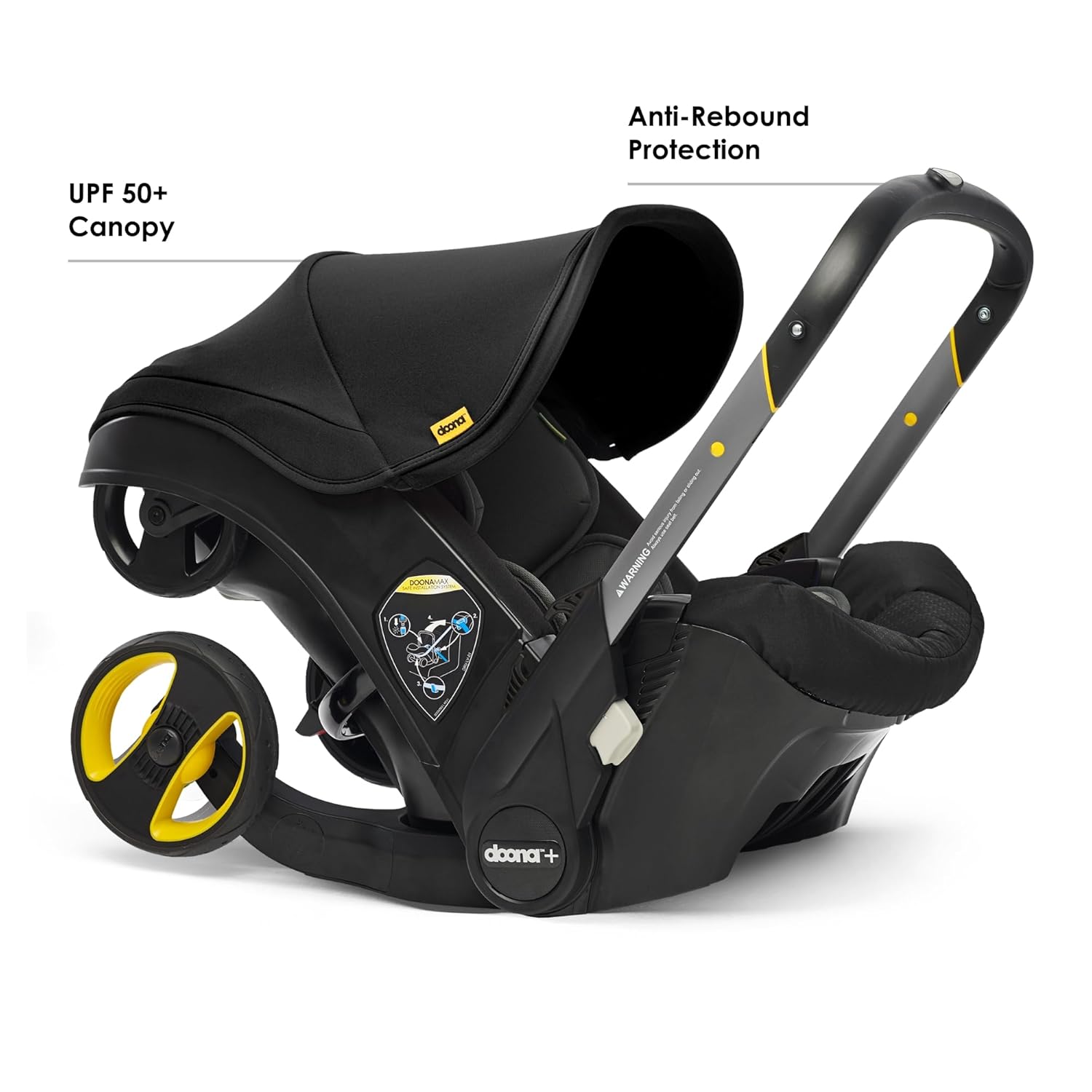
If you’ve just started researching baby gear and someone mentions the Doona, your first reaction is usually some version of wait, that’s a real product? The Doona (roughly $600 at authorized retailers as of mid-2026) is an infant car seat — the kind that snaps in and out of your car’s base — that unfolds a built-in set of wheels and a handle so it can roll through an airport or a hospital corridor without you ever transferring your sleeping baby into a separate stroller frame. One product, two jobs. The pitch is genuinely clever: new parents lose an enormous amount of time and sanity in the “travel system” juggle (car seat plus separate stroller, sold together or separately, needing adapters to connect), and the Doona eliminates that friction entirely for the newborn stage. Whether that trade is worth it for your life is the whole question this article exists to answer.
By the time you’re reading this, you probably already know the Doona exists and you’re past the initial wow-factor. You’re now asking the harder question: is this the right primary gear choice, or is it a clever gadget that doesn’t survive contact with reality? That’s the right question. Let’s work through it.
| EDITOR'S PICKDoona Car Seat & Stroller | Mid-tierMaxi-Cosi Zelia 2 Luxe 5-in-1 M… | Budget pickUPPAbaby Adapter for Minu V3 -… | |
|---|---|---|---|
| Type | Car seat + stroller | Modular travel system | Adapter |
| Car seat compat. | Built-in | 5-in-1 modular | Aria + Mesa |
| Modes | — | 5 | — |
| Price | $650.00 | $499.00 | $39.99 |
| See on Amazon → | See on Amazon → | See on Amazon → |
What the Doona Actually Is — and Isn’t
Let’s set a baseline so we’re comparing apples to apples.
The Doona is an infant car seat with integrated stroller wheels — not a convertible stroller, not a travel stroller in the umbrella-stroller sense (lightweight, cheap, minimal), and not a full-size pram. It’s certified as an infant car seat (rear-facing, for babies roughly 4–35 lbs depending on height limits) and it meets US FMVSS 213 and European ECE R44/04 safety standards, per Doona’s published certification documentation. The wheels and chassis fold flush against the seat shell when in car-seat mode; in stroller mode, they drop down and lock, and the integrated handle extends. The whole conversion takes about three seconds.
What it is not: a stroller you’ll use at age two. The Doona has a weight limit and a height cutoff that most babies hit somewhere between 9 and 18 months. After that, you need a toddler stroller regardless. This is not a flaw — infant car seats are always a finite category — but it is the single most load-bearing fact in the Doona purchase decision, and we’ll return to it.
By the numbers:
- Retail price (2026): ~$600 (base), ~$700 with the anti-rebound bar bundle
- Weight: 16.5 lbs (seat + wheels + base)
- Infant car seat weight limit: 35 lbs / ~32 inches
- Wheel span in stroller mode: narrower than most umbrella strollers at ~19.5 inches
The Case For the Doona: Where It Genuinely Wins
Urban and transit-heavy families are the clearest beneficiaries, and reviewers at The Bump and Parents.com consistently surface the same scenario: parents who live in dense cities, use ride-shares regularly, and don’t own a car. If your stroller needs to get in and out of a Lyft or subway three times a day, the Doona’s pitch becomes extremely strong. You load in, pop the wheels up, clip in to the car-seat base (or use the lap-belt install), and go. There’s no adapter, no stroller frame to fold separately, no second bag.
Frequent flyers with infants are a close second. Parents.com’s 2025 roundup of best travel strollers highlights the Doona specifically for the gate-check scenario: because it’s technically a car seat (which airlines gate-check for free), you’re not paying a stroller fee or navigating a separate gate-check bag. Owners on aggregated reviews consistently call this out as a genuine quality-of-life win over the first six months of travel.
The newborn stage at hospitals and early appointments is another real use case. The Doona was originally designed (per Doona’s own brand history materials) for Israeli hospitals, where parents needed a safe in-car solution that also worked in corridors. That DNA shows: it’s excellent at the specific problem of moving a sleeping newborn from car to building and back without disturbing them.
Families with only one car seat slot to fill — say, parents who need a grandparent’s car or a nanny’s car set up identically — sometimes buy a second Doona purely for the simplicity of everyone using the same system.
The Case Against the Doona: The Real Tradeoffs
Here’s where we have to be honest, and where a lot of Instagram-influenced purchases go sideways.
The ergonomics for daily strolling are genuinely compromised. The Doona’s handlebar doesn’t adjust for height the way a conventional stroller does — it has one position, and owners who are taller than average consistently flag this in long-form reviews on BabyGearLab and similar outlets. The wheels, while adequate, don’t offer the suspension or maneuverability of even a mid-range dedicated stroller like the UPPAbaby Cruz V2. If you’re doing a two-mile walk in the park every morning, you will feel the difference.
The basket is vestigial. Wirecutter’s stroller coverage has flagged this repeatedly: the under-seat storage on the Doona is small enough that it’s almost symbolic. You’re not doing a grocery run. You’re carrying a diaper bag on your shoulder. For urban parents who are used to the generous baskets on a Bugaboo Bee or a Nuna MIXX, this is a daily friction point.
The total cost math deserves scrutiny. At $600, the Doona is priced at or above dedicated infant car seats like the Nuna PIPA RX ($500) and well above the Chicco KeyFit 35 (~$200). If you also need a stroller for anything beyond the newborn stage — and you will — you’re buying two products. Contrast that with a travel-system approach: a mid-range infant car seat plus a compatible stroller frame (like the UPPAbaby Minu or MESA compatibility system) comes in around $700–900 total and gives you a more capable strolling experience in the meantime. The Doona’s “one product” simplicity can actually be a more expensive path depending on how you configure your longer-term setup.
It has a finite runway. BabyGearLab’s infant car seat reviews note that most babies hit the Doona’s height limit before they hit the weight limit — meaning your actual useful window may be closer to 9–12 months than the theoretical maximum. For a $600 purchase, that’s a cost-per-month figure worth running.
Resale value is real but conditional. As of mid-2026, sold listings on GoodBuy Gear show Doona infant car seats in good condition trading between $200 and $350 — reasonable retention relative to original price, but only if the seat is within its expiration window (car seats have printed expiration dates, typically 6–7 years from manufacture). Expired seats can’t be resold safely and have essentially zero market value. Buyers should verify the manufacture date before purchasing used.
The Doona vs. a Dedicated Travel System: Naming the Tradeoffs
This is the comparison most readers are actually making, and it’s worth laying out the decision clearly.
| Factor | Doona | Infant Seat + Stroller Frame |
|---|---|---|
| Newborn transport convenience | Excellent | Good (requires adapter) |
| Daily strolling ergonomics | Fair | Good to excellent |
| Basket space | Poor | Good |
| Total cost (to toddler stage) | $600 + toddler stroller | $700–900 + toddler stroller |
| Travel / ride-share | Excellent | Good |
| Weight | 16.5 lbs | 12–22 lbs combined (varies) |
The pattern across aggregated reviews is consistent: the Doona wins on the specific scenario of car-to-building portability with a sleeping newborn. It loses on everything that looks like extended strolling. If your life is heavy on the former and light on the latter, the math tips toward Doona. If it’s the reverse, you’re buying a limitation.
Who Should Buy the Doona (and Who Shouldn’t)
Buy it if:
- You’re a city dweller who ride-shares frequently and doesn’t plan regular long-distance walks with the stroller.
- You travel by air multiple times in your baby’s first year and want the gate-check benefit.
- You already own or are budgeting for a lightweight toddler stroller (a Babyzen YOYO, a Bugaboo Butterfly, etc.) and see the Doona as a deliberate phase-one product.
- You’re a gift buyer looking for something genuinely useful for an urban new parent — the Doona Nitro (the sport-finish variant) in particular photographs well and reads as a considered, premium choice.
Skip it if:
- You’re suburban or rural and your primary strolling is long walks, parks, and grocery runs — a full-featured travel system will serve you better daily.
- You want one stroller to last from birth through preschool (or close to it). The Doona exits the picture at infant stage; it’s not that product.
- You have a taller-than-average partner who will push the stroller regularly and hasn’t reviewed the fixed handlebar height against their own ergonomics.
- Budget is a constraint and you’re tempted to treat the Doona as your only stroller to save money — reviewers at The Bump consistently note that parents who try this approach end up buying a toddler stroller at 10–12 months anyway, having gotten less daily utility from the Doona than they expected.
The Bottom Line
The Doona is a genuinely excellent solution to a specific problem: moving a newborn between a car and any number of non-car locations without waking them or buying two separate pieces of gear. It earns its price in that scenario. It doesn’t earn it as a primary stroller for parents whose daily life involves substantive walking, cargo hauling, or varied terrain.
If you’re building a two-phase gear strategy — Doona for months 0–12, lightweight toddler stroller for months 12–48 — this is a coherent and well-reasoned approach. If you’re hoping the Doona is a clever shortcut to owning only one thing, the reviews suggest it usually isn’t.
The decision rule: If you get in and out of cars or ride-shares more than you push a stroller on foot, buy the Doona. If it’s the other way around, put your $600 toward a better travel system and you’ll use every dollar of it.