August 22, 2026 • Margot Ellery • 9 min reading time • Prices verified June 13, 2026
Graco Modes Pramette vs. Graco Modes Nest: Which Travel System Is the Better Buy?
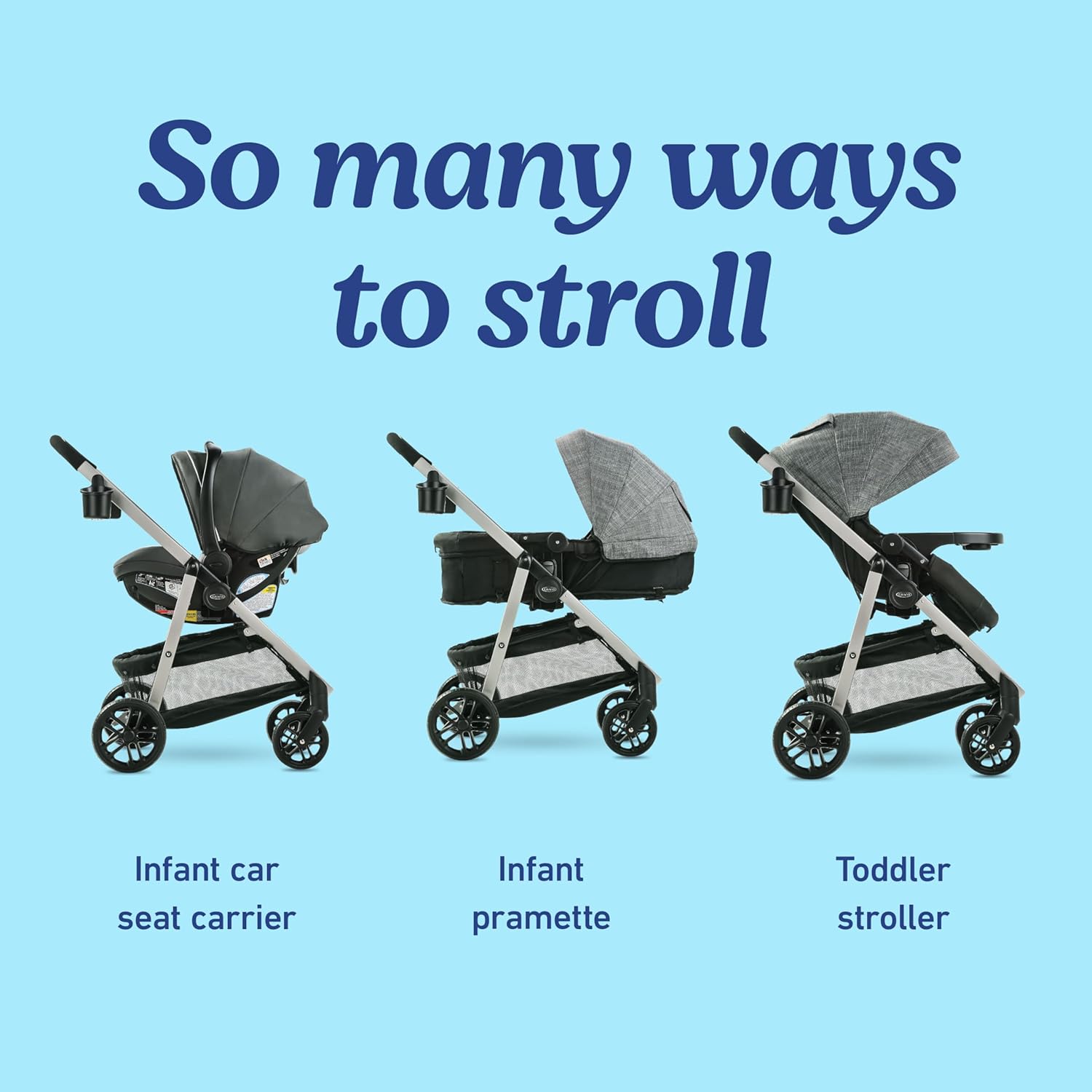
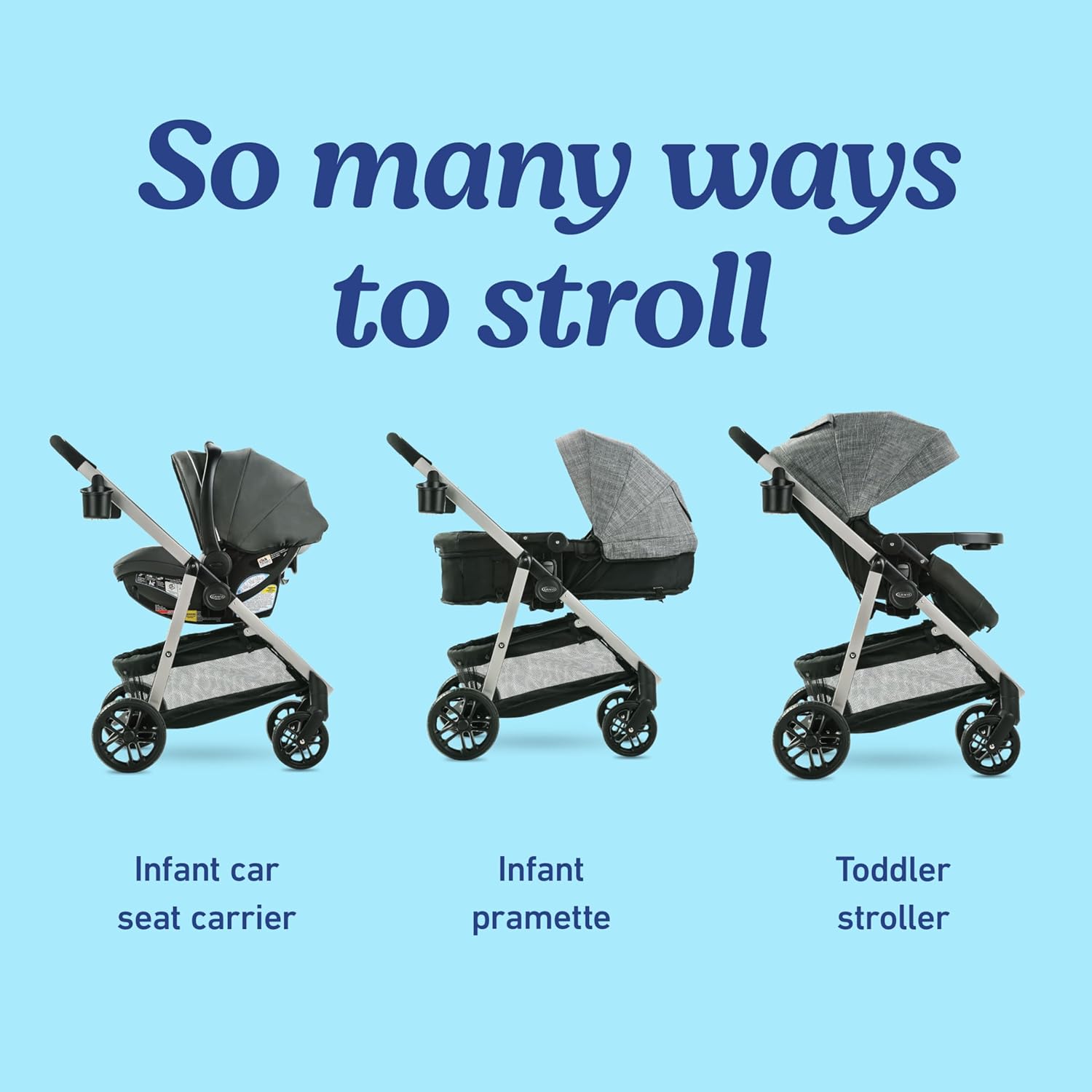
If you’ve never shopped for a stroller before, here’s the fast orientation: a travel system is a bundle deal — you get a stroller frame plus an infant car seat that clips directly onto it, so you can move a sleeping baby from car to sidewalk without unbuckling anything. It’s one of the most genuinely useful setups for the first year of life, which is why travel systems consistently appear at the top of roundups like Good Housekeeping’s “Best Baby Travel Systems” and What to Expect’s “Best Strollers for Newborns.” The Graco Modes line sits right in the middle of the market — not a budget-basement buy, but well below the $1,000-plus tier — and it earns its reputation by promising one chassis that handles multiple riding configurations as the baby grows. The Pramette and the Nest are the two flagship options in that line, and they’re close enough in price and feature set that the choice genuinely trips people up. This article lays out exactly where they diverge, names the trade-offs directly, and ends with a clear decision rule so you can move on with your life.
| EDITOR'S PICKGraco Modes Nest Travel System | Mid-tierGraco Modes Pramette Travel Sys… | Budget pickGraco Modes Pramette Stroller | |
|---|---|---|---|
| Car seat | SnugRide DLX | SnugRide LX | ✗ (not included) |
| Modes | 3-in-1 | 3 modes | 3-in-1 |
| Car seat carry | Slide2Me | — | — |
| Seat | — | — | Reversible |
| Fold | — | — | One-hand |
| Price | $479.99 | $359.99 | $249.99 |
| See on Amazon → | See on Amazon → | See on Amazon → |
What You’re Actually Comparing
Both systems ship with a Graco SnugRide infant car seat, a stroller frame, and the promise of “multiple modes” — configurations that let you face the baby toward you, face them forward, use the stroller seat as a flat-lie pramette position for newborns who shouldn’t be seated upright, and eventually convert to a standard forward-facing toddler seat. That core architecture is identical. Where they split:
- Graco Modes Pramette includes the SnugRide SnugLock 35 LX infant car seat.
- Graco Modes Nest includes the SnugRide SnugLock 35 DLX infant car seat — and ships with a dedicated infant bassinet attachment as a separate component.
That bassinet is the headline difference, and it changes the calculus for newborn use significantly. But it also introduces the main friction point owners report with the Nest — more on that shortly.
Side-by-Side Specs
| Feature | Graco Modes Pramette | Graco Modes Nest |
|---|---|---|
| Included car seat | SnugRide LX | SnugRide DLX |
| Dedicated bassinet | No (pramette seat mode only) | Yes (separate component) |
| Stroller weight (approx.) | ~26 lbs | ~28 lbs |
| Child weight limit (stroller seat) | 50 lbs | 50 lbs |
| Car seat weight limit | 35 lbs | 35 lbs |
Head-to-Head: Three Ways These Strollers Diverge
H3: Newborn Sleep Setup
The most consequential difference between these two systems is how each handles the newborn stage — roughly birth through four to six months, before a baby has reliable head and neck control.
The Pramette addresses this with its namesake “pramette mode”: the stroller seat reclines fully flat so a newborn can lie on their back, properly supported, rather than slumping in a semi-reclined position. Reviewers at The Bump, in their “Best Travel System Strollers” guide, highlight this feature as a meaningful differentiator from strollers that only offer a partially reclined infant position. In practice, parents report using it confidently from birth and transitioning out of it around the five- or six-month mark.
The Nest takes a different approach: instead of relying on a reclining seat, it ships with a dedicated bassinet component — a structured, enclosed sleeping surface that attaches to the stroller frame as its own unit. This is a more purposefully newborn-specific solution. The raised sides and flat floor more closely resemble a traditional bassinet than anything a reclining seat can replicate.
The trade-off is a characteristic that recurs across Nest owner accounts: the bassinet rocks slightly when the stroller is pushed. The pattern in those reviews is consistent — initial alarm, obsessive Googling, gradual realization that the motion is gentle and uniform rather than structural looseness, and eventually genuine appreciation for it as a sleep aid on afternoon walks. Based on Graco’s published product documentation, the motion is a designed characteristic of how the bassinet component interfaces with the frame to absorb vibration, not a sign of a defective connection. Knowing this before your first walk is genuinely useful.
The Pramette’s pramette mode doesn’t exhibit this characteristic because the seat itself — which reclines flat — is a rigid, fixed attachment to the frame.
Graco
$359.99
In stock on Amazon
Check price on AmazonH3: Car Seat Specification
Both travel systems include a Graco SnugRide SnugLock 35 infant car seat covering the same weight range (4–35 lbs) and using the same LATCH installation system. The version bundled with each stroller is where they diverge.
The SnugRide LX (included with the Pramette) is Graco’s mid-tier infant seat. It covers all the core safety bases — rear-facing installation, LATCH connectors, a removable newborn insert for the smallest infants — but uses a traditional re-thread harness, meaning you have to disassemble part of the harness to reposition the shoulder straps as the baby grows.
The SnugRide DLX (included with the Nest) steps up with a no-rethread harness: a single-dial adjustment repositions the shoulder straps without disassembly. Reviewers at BabyGearLab, in their “Graco Modes Pramette Travel System Review,” flag the no-rethread harness as a meaningful daily-use upgrade, particularly for parents who are adjusting harness fit frequently in those first months as the baby grows. The DLX also adds more structured infant padding and a more refined fabric finish.
For parents who plan to use the infant seat heavily across multiple daily transfers — daycare drop-off, errand runs, nap preservation during transitions — the no-rethread harness is a genuine quality-of-life feature rather than a marketing upgrade.
Graco
$359.99
In stock on Amazon
Check price on AmazonH3: Fold, Storage, and Daily Handling
Both strollers fold for transport and storage, but they handle that fold differently in one specific way that matters depending on your living situation.
The Graco Modes Pramette folds flat and cannot stand upright when collapsed. This limitation recurs consistently in owner reviews and is worth taking seriously before you buy. If you have an SUV with a large cargo area, a dedicated garage stroller spot, or a spacious entryway, this is a non-issue — you lay it on its side and move on. If you have a compact car, a crowded trunk, or a New York City hallway closet where vertical storage is the only option, this is a genuine constraint.
The Nest, at approximately 28 lbs, runs about two pounds heavier than the Pramette — a difference that accumulates over thousands of lift-and-fold repetitions. Parents who do frequent car transfers report noticing the weight difference over time, though neither stroller is particularly light for its class.
Both strollers are consistent with what reviewers at Parents, in their “Best Strollers of the Year” coverage, describe as a characteristic of mid-tier multi-mode travel systems generally: they prioritize configurability and longevity over ultra-portability. If lightweight folding is your primary concern, a different category of stroller — a lightweight single-purpose frame, for instance — is probably a better match.
Graco
$359.99
In stock on Amazon
Check price on AmazonThe Trade-Off Frame: How to Decide
Both systems earn their “only stroller you’ll ever need” reputation in owner reviews, and the consistency of that enthusiasm across buyers is credible. Parents at both price points compare them favorably to significantly more expensive options — a pattern noted in Good Housekeeping’s “Best Baby Travel Systems” coverage and echoed in What to Expect’s “Best Strollers for Newborns” guide when discussing the mid-budget travel system category.
But they serve slightly different parents:
The Pramette is the right call if:
- You prioritize a simpler, slightly lighter daily package over a dedicated bassinet
- You’re okay with flat-fold storage (the stroller cannot stand upright when collapsed)
- You want to spend a little less and direct the savings toward other gear
- The assembly learning curve doesn’t intimidate you — multiple owners flag the initial setup as fiddly, but almost universally follow that with “once it clicked, I loved it”
The Nest is the right call if:
- You want a true dedicated bassinet for the newborn stage, not just a seat that reclines flat
- You’re the kind of parent who will feel better with a more structured, enclosed newborn sleep environment on walks
- The DLX car seat’s no-rethread harness is worth the price step to you
- You can go in knowing about the bassinet’s slight rocking motion — and knowing it’s a design characteristic, not a defect
Neither stroller is objectively better. They’re optimized differently. The Nest costs slightly more and delivers a more newborn-specific setup; the Pramette is leaner and still handles every developmental stage capably.
Frequently Asked Questions
Can the Graco Modes Pramette stand upright when folded? No — this is a confirmed limitation that appears consistently in owner reviews and is worth knowing before you buy. The Pramette folds flat and must be stored on its side. If your trunk, garage, or entryway requires a stroller to stand on its own when collapsed, this is a real constraint. If you have a flat storage spot or an SUV cargo area, it’s a non-issue in practice.
Is the Graco Modes Nest bassinet safe if it wobbles slightly? Based on the pattern across owner accounts and Graco’s published product documentation, the slight rocking motion when the stroller is pushed is a designed characteristic of how the bassinet component interfaces with the frame — not a sign of a broken or improperly attached connection. Owners who initially find it alarming consistently report that it resolves into a non-concern within the first few weeks, and often describe it as a useful motion for settling the baby on walks. If you notice motion that feels excessive or asymmetrical, verify the attachment points against the included manual before continuing use.
What is the difference between the SnugRide LX and SnugRide DLX? Both are Graco SnugRide SnugLock 35 infant car seats covering the same weight range (4–35 lbs) and using the same LATCH installation system. The DLX (included with the Nest) adds a no-rethread harness — a single-dial adjustment that repositions the shoulder straps without disassembly — plus more structured infant padding and a more refined fabric. BabyGearLab’s “Graco Modes Pramette Travel System Review” identifies the no-rethread harness as a meaningful daily-use upgrade for parents adjusting harness fit frequently in the first months.
Can I use the Pramette stroller frame without the included car seat? Yes. The stroller frame functions independently as a multi-mode stroller once your baby has sufficient head and neck control for the seat configurations. The frame also accepts other compatible infant seats via Graco’s SnugRider adapter system, though you should verify compatibility with your specific seat before assuming it clips in.
How long can a baby use the pramette or lie-flat mode? Graco’s published guidelines rate the pramette (lie-flat) position for use from birth. Most pediatric guidance suggests transitioning out of fully reclined newborn positions once a baby demonstrates reliable head and neck control — typically somewhere between four and six months, though this varies by child. The stroller seat in upright and forward-facing modes carries children up to 50 pounds, giving the frame substantial longevity well into toddlerhood.
Both the Graco Modes Pramette and the Graco Modes Nest represent genuine value in a category where the price ceiling runs much, much higher. The decision between them is narrower than it looks — it mostly comes down to whether a dedicated bassinet and a better-spec’d car seat are worth the price step. If you know your answer to that question, you know which one to buy.