August 10, 2026 • Margot Ellery • 11 min reading time • Prices verified June 13, 2026
Jogging Strollers for Non-Runners Too: BOB Revolution vs. BOB Wayfinder vs. Chicco Activ3
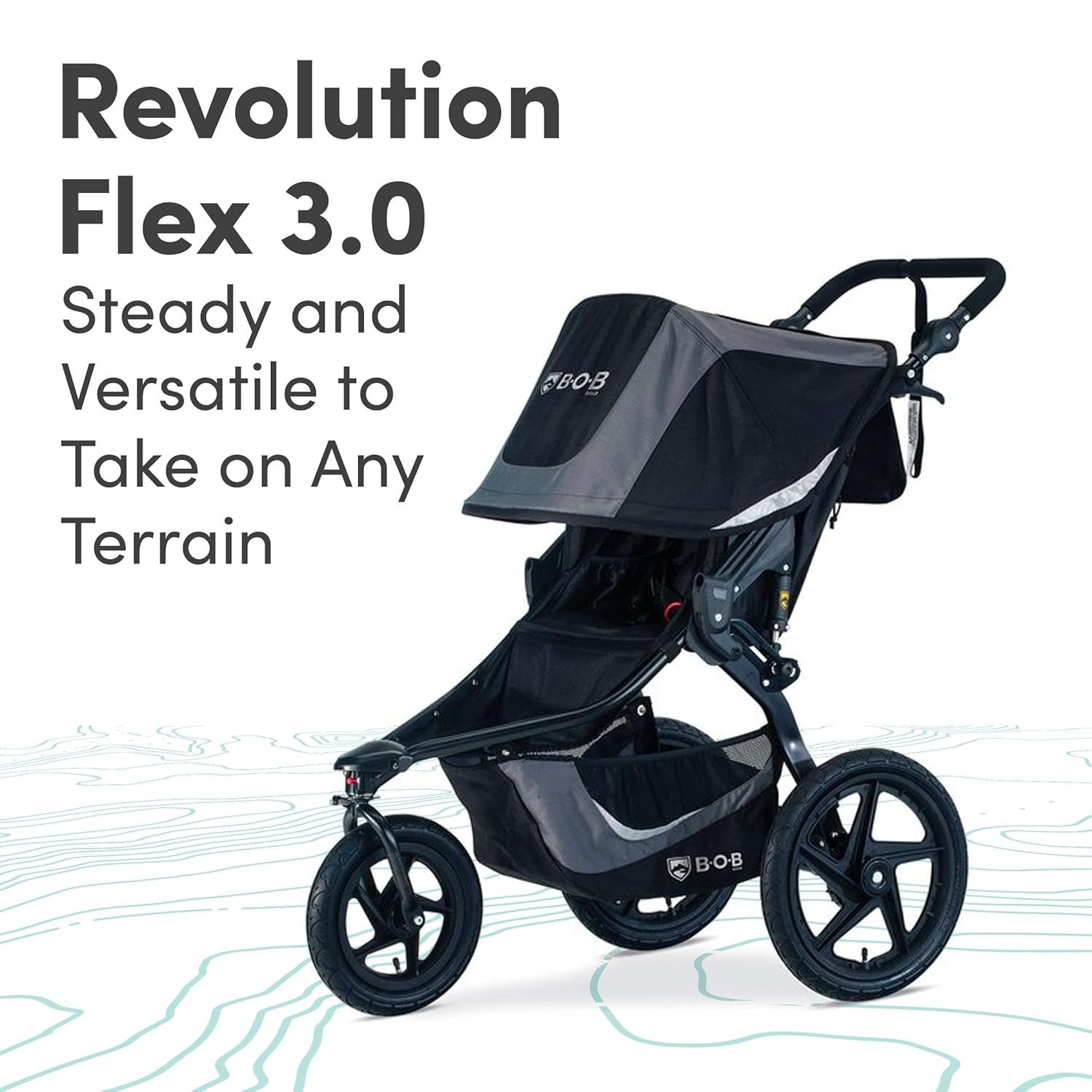
Here’s the thing nobody tells you when you start researching jogging strollers: most people who buy them don’t run. Or they run occasionally — a couple of miles on a Saturday when the weather cooperates — but mostly they want a stroller with big, air-filled tires (think bicycle tires, not the hard plastic wheels on a regular stroller) and a suspension system that absorbs bumps. That’s it. A jogging stroller — technically any stroller built with a three-wheel design, larger pneumatic (air-filled) tires, and a fixed or lockable front wheel for directional stability at speed — is really just an all-terrain stroller that also happens to be safe for running. If you’ve ever pushed a flat-wheeled city stroller over a cobblestone path and winced, you already understand the appeal.
This article breaks down three of the most-searched jogging strollers in 2026: the BOB Revolution, the BOB Wayfinder, and the Chicco Activ3. We’ll name the real tradeoffs, show the math where it matters, and give you a clear decision rule at the end — because “it depends” is not actually useful when you’re standing in a store or staring at a browser tab at 11 p.m.
| EDITOR'S PICKBOB Gear Wayfinder Jogging Stro… | Mid-tierBaby Trend Expedition Double Jo… | Budget pickBaby Trend Expedition® Jogger | |
|---|---|---|---|
| Seats | 1 | 2 | 1 |
| Weight limit | 75 lb | — | — |
| Suspension | Dual | — | — |
| Tires | Air-filled | — | — |
| Color | Nightfall | Griffin | Phantom |
| Price | $543.99 | $215.99 | $159.99 |
| See on Amazon → | See on Amazon → | See on Amazon → |
The Fast Version: Who Each Stroller Is Actually For
Before we get granular, here’s the honest shortcut:
BOB Revolution — The performance benchmark. Runners who take it seriously and parents who want the best all-terrain capability money can buy in a single stroller. Storage is its known weak point — we’ll cover that in detail.
BOB Wayfinder — BOB’s answer to “I want BOB quality but I also need this as my everyday stroller.” More compact fold, more urban-friendly, slightly lighter. One ergonomic compromise worth knowing about before you buy.
Chicco Activ3 — The smart value play. Pairs with the Chicco KeyFit car-seat ecosystem without an adapter, which is a genuine money-saver. Proven multi-year durability documented in long-form owner reviews spanning five-plus years of daily use.
By the Numbers
| Model | Weight | Max Child Weight | Tire Size | Car Seat Ready |
|---|---|---|---|---|
| BOB Revolution Flex 3.0 | ~25 lbs | 75 lbs | 16” rear / 12” front | Adapter required |
| BOB Wayfinder | ~24 lbs | 65 lbs | 12” all-around | Adapter required |
| Chicco Activ3 | ~28 lbs | 50 lbs | 12” all-around | KeyFit no-adapter fit |
Spec data per manufacturer published specifications as of May 2026. Always verify current specs at point of purchase — model-year updates do occur.
Head-to-Head: The Three Strollers in Detail
BOB Revolution: The One That Actually Runs
BOB
$543.99
In stock on Amazon
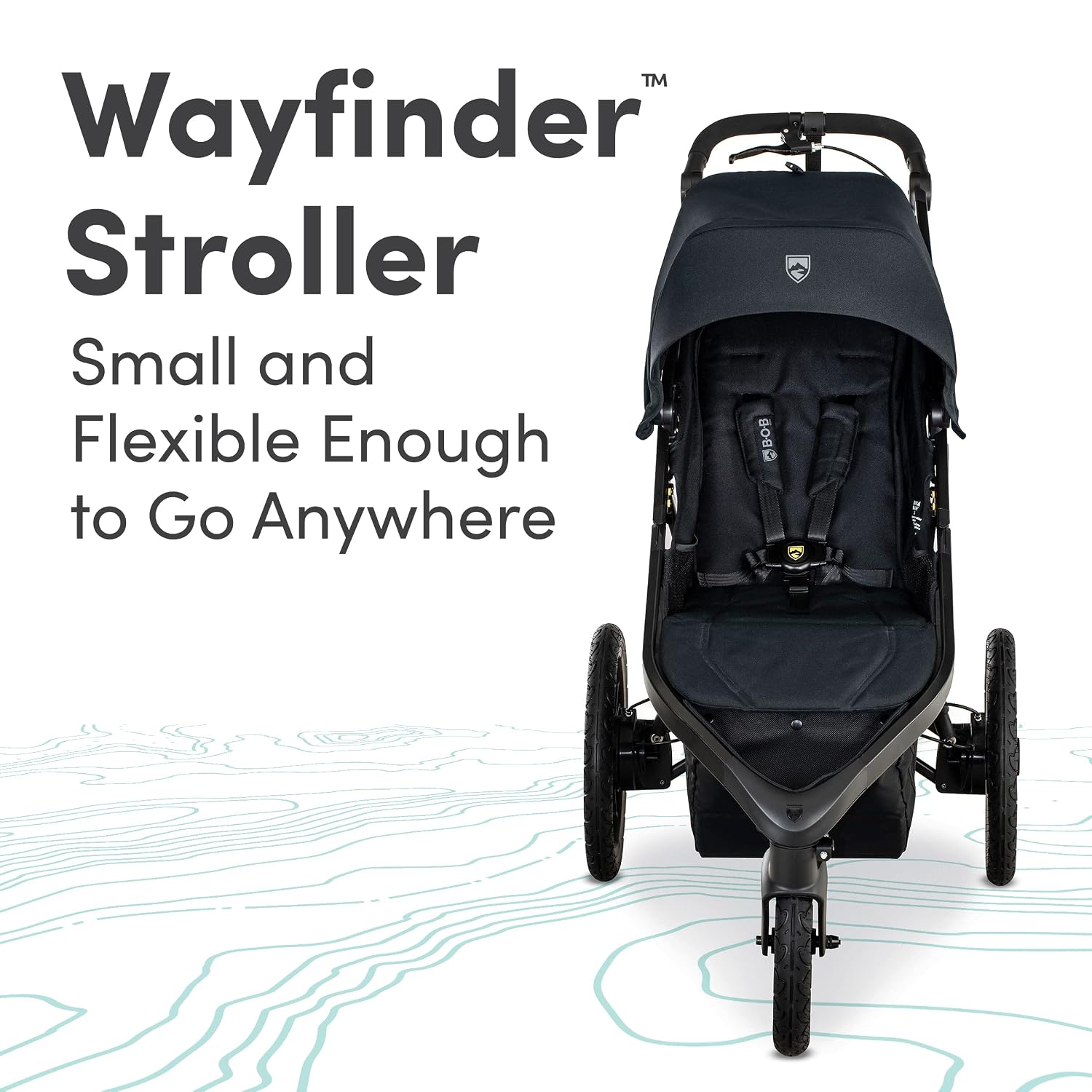
Check price on AmazonThe BOB Revolution has been the reference standard for jogging strollers for the better part of two decades. Based on aggregated editorial testing documented in BabyGearLab’s “Best Jogging Strollers” roundup and the Wirecutter / New York Times “The Best Jogging Stroller” guide, it continues to hold that position in current review cycles. Owners consistently report that the dual spring-and-elastomer suspension genuinely absorbs trail chop in a way that budget competitors don’t come close to matching. The 16-inch rear tires are legitimately bicycle-scale, which means they roll over roots, gravel, and cracked sidewalks with almost no effort-transfer to the handle.
The running experience itself earns near-universal praise in long-format owner reviews. Parents who run three to five days a week report that the Revolution tracks straight at pace, the swivel-to-lock front wheel transitions without tools, and the adjustable handlebar — a feature that sounds minor until you’re six feet tall and your spouse is five-three — genuinely matters for stride clearance.
The verified limitation: storage. This is not an occasional complaint — it appears consistently enough across review aggregations in BabyGearLab’s “Best Jogging Strollers,” What to Expect’s “Best Jogging Strollers of 2025” editorial, and Good Housekeeping’s “Best Jogging Strollers” roundup to be treated as a design fact rather than an outlier. The Revolution’s underseat basket is awkward to access while the child is seated, and its capacity runs smaller than parents accustomed to full-size city strollers expect. If you’re doing a full park day with a diaper bag, snacks, a change of clothes, and a water bottle, you will notice this. The standard workaround is a handlebar organizer or parent console — functional, but it’s a $25–40 add-on on a premium-priced stroller.
The Revolution’s 75-pound maximum child weight is genuinely notable. That’s upper-elementary-school territory. Owners who have documented five-plus years of use in long-form reviews cite this longevity as a key value justification — a stroller that grows through toddlerhood and into the early school years carries a very different cost-per-year calculation than one that tops out at 40 or 50 pounds.
Best for: Committed runners, serious all-terrain use, parents who want one stroller for the long haul.
BOB
$543.99
In stock on Amazon
Check price on AmazonBOB Wayfinder: The Compromise That Mostly Works
Baby
$215.99
In stock on Amazon
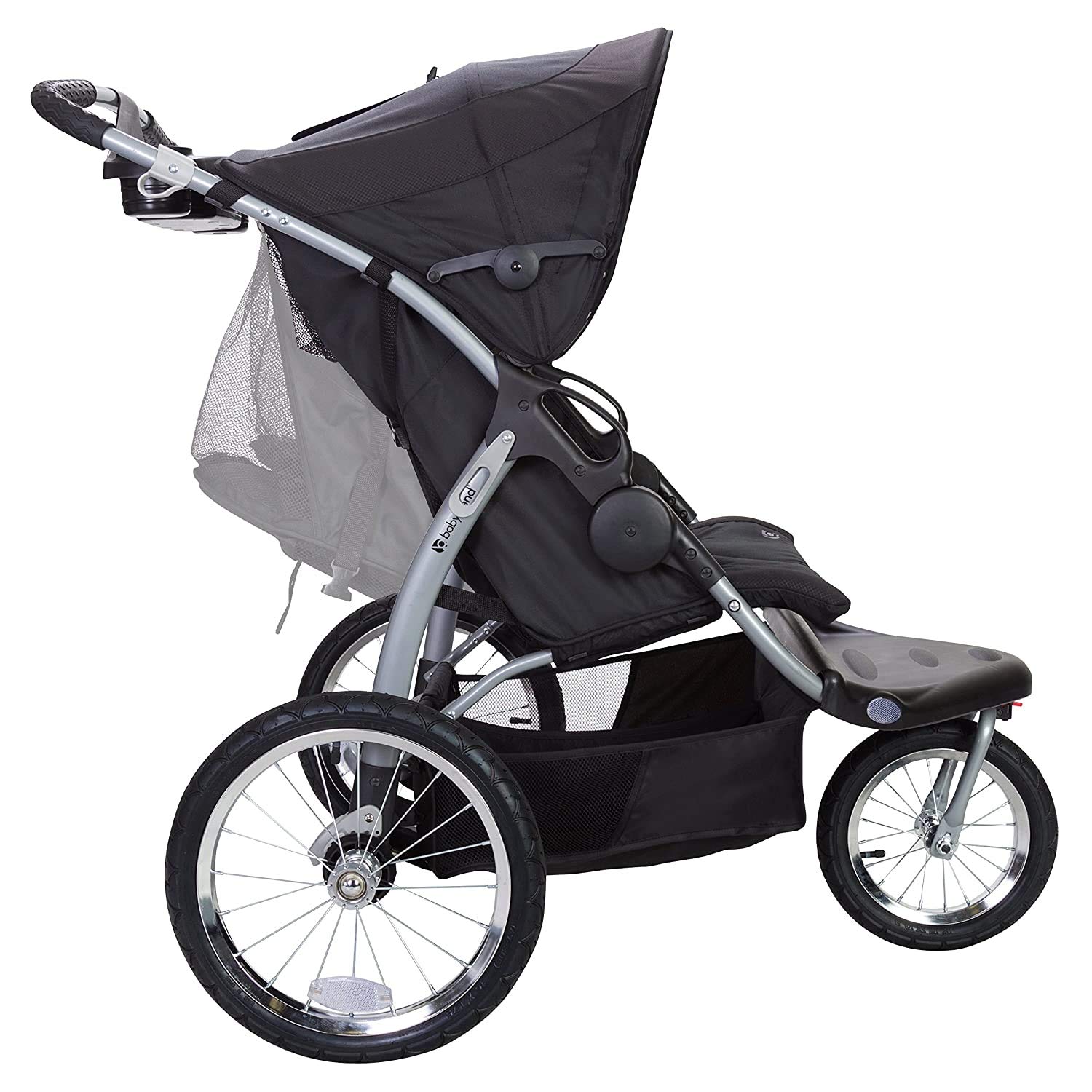
Check price on AmazonThe Wayfinder is BOB’s attempt to build a running-capable stroller that also folds compactly enough to work as a true everyday option. It’s lighter than the Revolution by about a pound, the fold is significantly more compact, and the design explicitly accounts for urban use — smaller elevator footprints, narrower doorways, tighter sidewalk navigation.
Owners who’ve made the Wayfinder their primary stroller report genuine satisfaction with ride quality on mixed surfaces. The 12-inch tires don’t match the Revolution’s trail performance, but on the spectrum between a hard-wheeled city stroller and a true running jogger, the Wayfinder sits meaningfully closer to the running end. It handles gravel paths, packed-dirt trails, and cracked urban sidewalks well. It’s not a technical-trail stroller; it’s an “anywhere a confident parent walks” stroller.
The ergonomic catch: the seat recline. This one is worth explaining clearly because it shows up in enough editorial coverage — including in What to Expect’s “Best Jogging Strollers of 2025” analysis — to be a genuine heads-up rather than nitpicking. The Wayfinder’s seat reclines via a pull-strap mechanism rather than a lever or button. It works, but it’s a two-handed operation that requires deliberate effort. Parents who recline frequently for naps — or who have a child who falls asleep mid-walk and needs a quick, quiet recline — find it fussier than they’d like. If a smooth one-hand recline matters to you (and it often does, because children always fall asleep at the least convenient moment), this is worth weighing seriously before you buy.
The Wayfinder’s 65-pound max child weight is lower than the Revolution’s 75 pounds — a meaningful difference if you’re hoping to use this stroller through age five or six.
Best for: Parents who need an everyday urban stroller that can occasionally double as a running rig, without the Revolution’s price premium or trail-focused bulk.
Baby
$215.99
In stock on Amazon
Check price on AmazonChicco Activ3: The Case for the Value Play
Baby
$159.99
In stock on Amazon
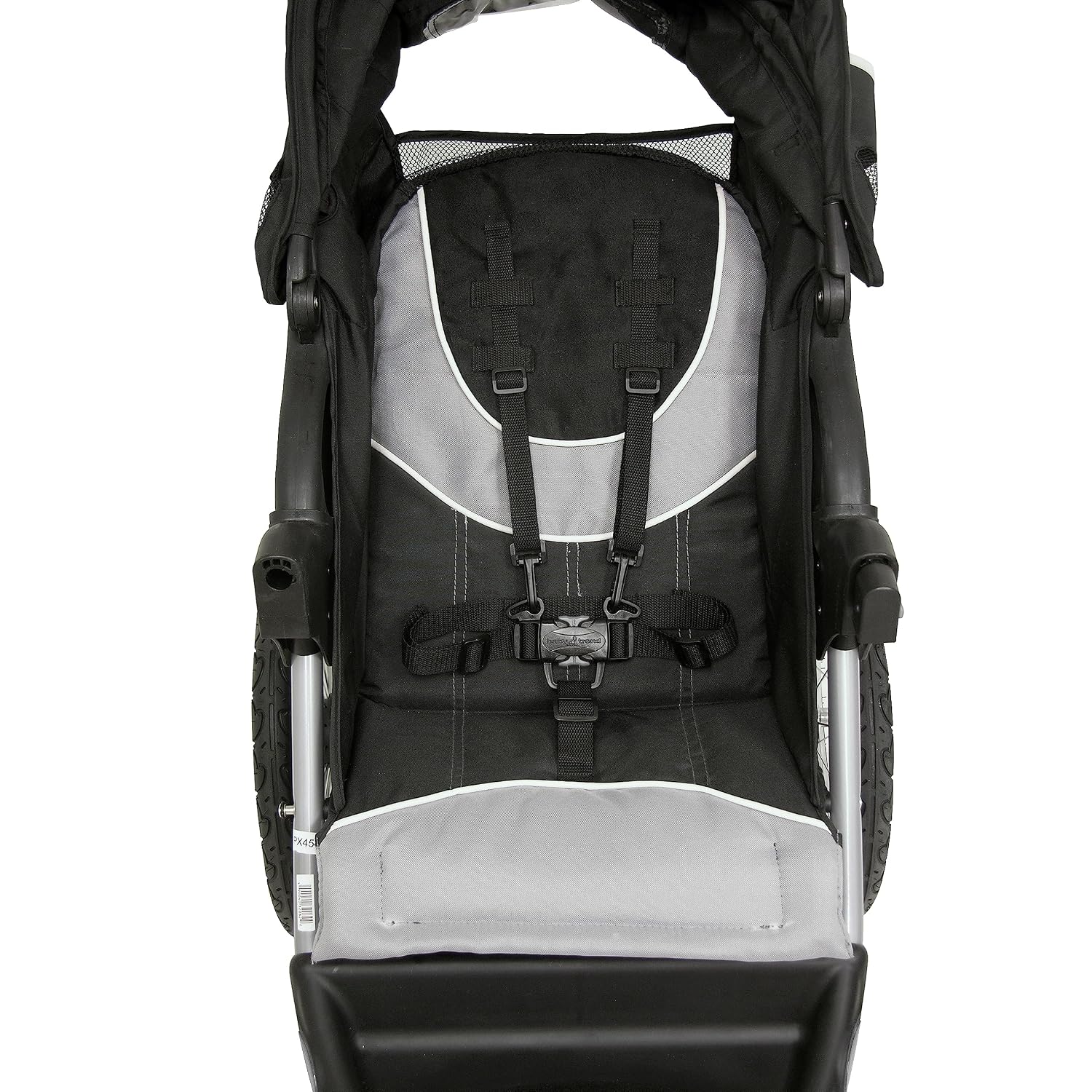
Check price on AmazonHere’s the most useful data point in this entire comparison: the Chicco Activ3 earns genuine endorsements not just from first-time stroller owners, but from long-term parents who also own premium options and still call the Chicco a legitimate contender. That kind of credentialing matters. It’s easy to rave about an affordable stroller when it’s the only one you’ve owned; it means something different when the reviewer is comparing it directly against a BOB and still recommends it for the right buyer.
What justifies that endorsement? A few specific things.
The Chicco ecosystem advantage is real. The Activ3 accepts the Chicco KeyFit 30 and KeyFit 35 infant car seats without any adapter. In a world where jogging stroller adapters run $40–70 and sometimes require model-year-specific compatibility research, “plug it in and go” is genuinely valuable — especially for parents already in the Chicco ecosystem. The KeyFit 30 has been one of the top-selling infant car seats for years, per annual editorial roundups from Parents.com (“Best Jogging Strollers”) and Good Housekeeping (“Best Jogging Strollers”), and a large share of new-parent households already own one.
The multi-year durability data is strong. Long-form owner documentation of the Chicco Activ3 over multi-year daily use — including use on demanding mixed terrain — shows the stroller holding up without significant mechanical degradation. For a stroller in its price category, five years of functional daily use changes the value math considerably.
The Activ3’s 50-pound max child weight is the real ceiling here. That’s around age four for an average child, which means this is a toddler-years stroller, not a long-haul investment. If you want a stroller that grows with your child past preschool, this is not it. If you want a capable all-terrain option that pairs seamlessly with your Chicco infant seat and delivers real durability through the early years, it is very hard to beat at this price point.
Best for: Parents in the Chicco KeyFit ecosystem, buyers who want proven all-terrain performance without the premium price, families whose primary use window ends around age four.
Baby
$159.99
In stock on Amazon
Check price on AmazonFrequently Asked Questions
Do I need to lock the front wheel to run, and how does that work on each model?
Yes — for actual running at jogging pace and above, you should always lock the front wheel. A swiveling front wheel is great for tight turns at walking pace, but at running speed it can cause the stroller to veer unexpectedly, which is a safety issue. All three strollers offer front-wheel lock. On the BOB Revolution, it’s a lever at the wheel; on the Wayfinder, it’s built into the front fork mechanism; the Chicco Activ3 has a comparable front-wheel lock system. For walking and casual outdoor use, leaving the front wheel in swivel mode is fine — it makes the stroller easier to maneuver in tight spaces.
Can I use a jogging stroller as my everyday stroller, or is it too bulky?
Depends on “everyday.” Owners who live in walkable neighborhoods, push primarily outdoors, and have a car rather than a subway frequently use jogging strollers as their only stroller without significant complaint. The trade-off: jogging strollers are wider, longer, and heavier than compact city strollers, which makes tight restaurant aisles, crowded grocery stores, and bus or subway travel noticeably more difficult. The BOB Wayfinder is the best of these three for urban versatility. If you’re a subway-dependent urban parent, you’ll likely want a dedicated compact stroller as well.
Which jogging strollers accept an infant car seat, and do I need an adapter?
The Chicco Activ3 accepts Chicco KeyFit 30 and 35 infant seats natively — no adapter needed. The BOB Revolution and Wayfinder require brand-specific adapters to accept infant car seats; BOB makes adapters for Chicco, Britax, Graco, and several other brands, but verify the specific car-seat model and adapter compatibility before purchasing, as compatibility can vary by car-seat model year. BabyGearLab’s “Best Jogging Strollers” coverage includes compatibility notes that are useful for confirming fitment details.
How do these strollers perform on gravel, dirt trails, and uneven terrain?
The BOB Revolution leads this category — its 16-inch rear tires and dual suspension system handle loose gravel, packed-dirt trails, and rooted forest paths better than most consumer-grade jogging strollers. The Wayfinder and Activ3 both perform well on gravel and light trails; where they show their limits is sustained technical terrain with significant root exposure or deep loose gravel. For most parents whose “trail” means a park path or a gravel lot, all three are more than capable.
What is the maximum child weight for each of these jogging strollers?
The BOB Revolution Flex 3.0 is rated to 75 pounds (roughly age 8 for an average child). The BOB Wayfinder is rated to 65 pounds. The Chicco Activ3 is rated to 50 pounds (roughly age 4–5). Always confirm current specifications at point of purchase — these ratings can update between model years.
The Decision Rule
If you run seriously or want the best all-terrain capability available: The BOB Revolution is the correct answer. Accept the storage limitation, budget for a handlebar organizer, and buy it knowing you’re getting a stroller that can go the distance — literally and in terms of years of use.
If you need an everyday urban stroller that can also handle occasional running: The BOB Wayfinder is the better daily-use compromise. Research the seat recline mechanism carefully — or test it in person — before committing if mid-walk naps are a regular part of your life.
If you’re already in the Chicco car-seat ecosystem and want genuine all-terrain capability without the premium price: The Chicco Activ3 is the right call, backed by unusually strong real-world durability documentation. Know its 50-pound weight limit going in, and plan your upgrade timeline accordingly.
The least useful thing you can do is buy the Revolution because it’s the most expensive and assume it’s therefore the best fit. Fit is the variable. The stroller you’ll actually use — for runs, for trails, for the dog walk at 7 a.m. — is always the right stroller.