August 26, 2026 • Margot Ellery • 10 min reading time • Prices verified June 13, 2026
Jogging Strollers Worth Buying: From BOB Gear to Budget Picks That Keep Up
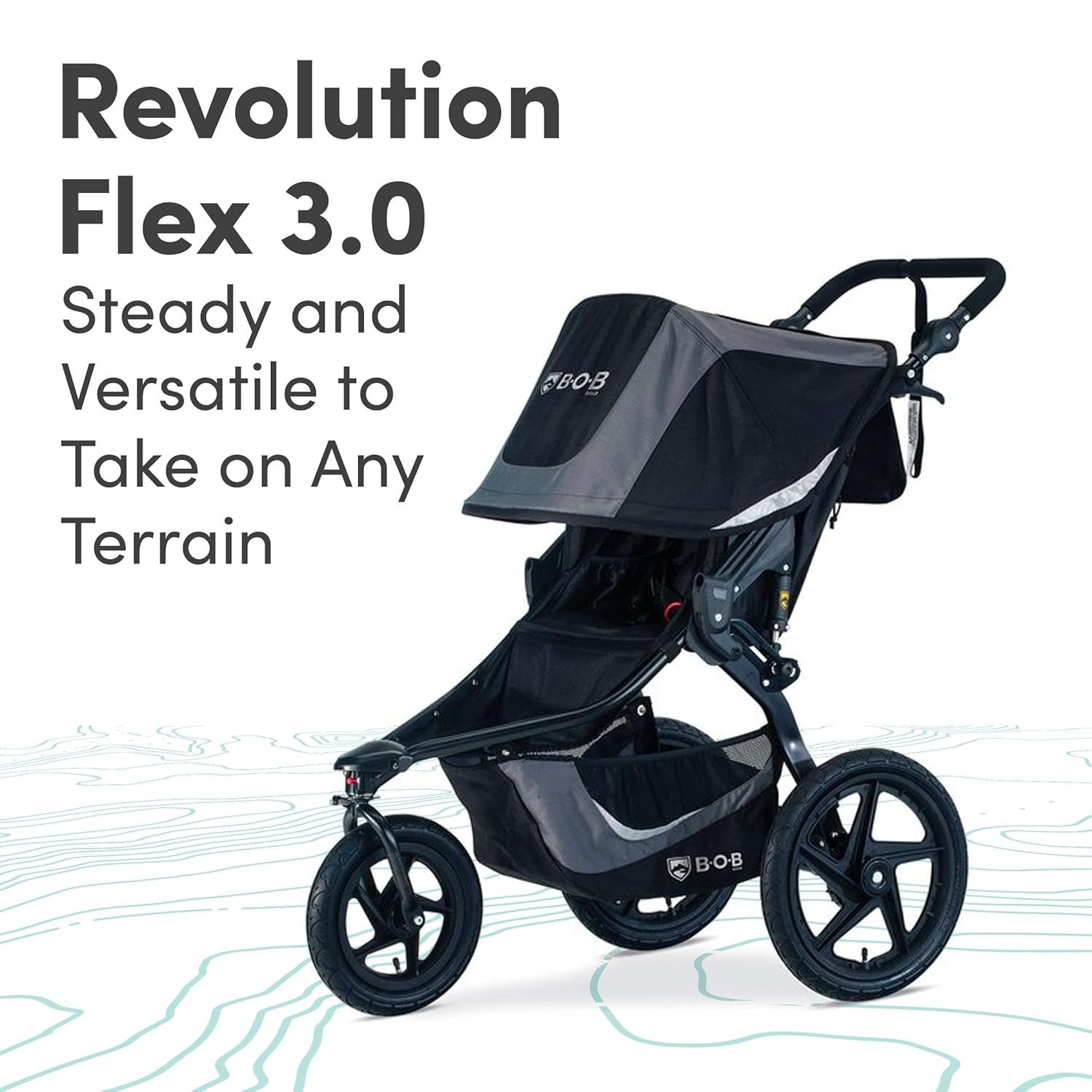
If you’ve ever tried to push a standard stroller — the everyday kind with small plastic wheels and a chassis built for sidewalk strolls — at anything faster than a brisk walk, you already know the problem: it wobbles, it fights you, and your wrists pay the price. A jogging stroller is a purpose-built category designed to stay stable at running speeds. The key differences are a fixed front wheel (or a wheel that locks forward for running), larger air-filled tires that absorb trail and road vibration, and a wrist strap that keeps the stroller with you if you lose your grip. They’re heavier than everyday strollers and not always ideal for tight grocery-store aisles — but for parents who want to keep their active routines after baby arrives, they’re essentially non-negotiable. This guide covers the options worth serious consideration in 2025–2026, names the tradeoffs that matter at each price point, and gives you a clear decision framework at the end so you’re not just picking the one with the nicest photos.
What Actually Separates a Good Jogging Stroller From a Mediocre One
Before we get into specific models, it’s worth agreeing on what “good” means in this category — because the spec sheet can be genuinely confusing.
Wheel configuration and suspension are the two load-bearing factors. Jogging strollers run on either 12-inch or 16-inch air-filled (pneumatic) tires. Larger wheels roll over more terrain without transferring the bump to the seat; smaller wheels are lighter and fine for paved paths. Suspension — the shock-absorbing system under the seat — does the rest of the work. Some models, like the BOB Revolution PRO, use a genuinely adjustable suspension that owners can tune to their weight and terrain. Others offer a fixed-rate system that’s fine for smooth pavement but noticeable on gravel.
Fixed vs. swivel front wheel is the other major split. A fixed front wheel is safer and more stable at running speeds — that’s the physics of it. A swivel front wheel (the kind that castes freely in any direction, like a grocery cart) makes the stroller more maneuverable when you’re walking in a crowded space, but should always be locked forward when you’re actually jogging. Most premium models give you both modes. Budget models sometimes ship with a permanently fixed wheel, which means great running performance but genuine inconvenience at the farmers market.
Minimum age and car-seat compatibility matter more than many buyers realize. No jogging stroller manufacturer recommends running with a newborn in the seat — infants don’t have the neck strength to handle the vibration. The industry-standard guidance, reflected in manufacturer documentation across BOB, Thule, and Chicco, is to wait until at least six months, or until the child can hold their head up unassisted. If you want to use a jogging stroller from birth, you’ll need an infant car-seat adapter, and you’ll be walking — not running — until baby is developmentally ready. Plan your purchase accordingly.
By the Numbers: The 2025–2026 Jogging Stroller Market at a Glance
| Tier | Price Range | Representative Models |
|---|---|---|
| Premium | $600–$900 | BOB Revolution PRO, Thule Urban Glide 3 |
| Mid-Range | $350–$599 | Chicco TRE, Graco Fastaction Fold Jogger |
| Budget | Under $350 | Baby Trend Expedition, Schwinn Interval |
Resale data from GoodBuy Gear (tracked through early 2026) suggests premium jogging strollers — particularly BOB and Thule — retain roughly 45–60% of retail value in good condition after two years of use, meaningfully better than budget category strollers, which typically land at 20–30% retention. That spread is worth factoring into your effective ownership cost.
The Premium Tier: BOB and Thule Set the Standard
BOB Gear Revolution PRO (~$749 retail) is the model that reviewers at Wirecutter and BabyGearLab consistently treat as the benchmark for the category. Owners report the adjustable suspension — which you dial with a single knob — is the feature that earns its price. It handles the shift from a 150-lb parent running alone to a loaded stroller with a toddler without requiring any trip to a service center. The handlebar adjusts across a wide height range, which owners over 6’1” specifically flag as a relief. The seat reclines flat enough for infant use with an adapter, and BOB’s own infant car-seat adapter system is broadly compatible with major brands.
The honest tradeoffs: at 28 lbs unloaded, it’s not a stroller you’ll want to carry up a flight of stairs daily. The fold is manageable but not compact. And at ~$749, you’re committing to a single-use chassis that won’t pull double duty as your everyday neighborhood stroller.
Thule Urban Glide 3 (~$699) is the European-heritage alternative that’s gained significant ground in U.S. reviews over the past two years. Good Housekeeping’s review panel notes it rides notably smooth on paved surfaces, and the one-hand fold is faster than most competitors at this price point. The seat weight limit (75 lbs) means it runs longer than most jogging strollers. Where it concedes to BOB: the suspension is fixed-rate and less forgiving on uneven trail surfaces. If your running is primarily road or paved path, Thule. If you’re regularly on gravel or light trail, BOB’s adjustable suspension justifies the extra $50.
Bumbleride Indie 4 (~$849) is the pick for the parent who runs and also cares about the object they’re parking in front of the yoga studio. Bumbleride uses recycled PET fabric throughout the seat, the company publishes its supply-chain sourcing, and the colorways are restrained in a way that reads genuinely considered rather than performatively neutral. Owners report excellent maneuverability for a four-wheel stroller design, and the basket is genuinely large. It’s not quite as fast or stable as BOB at full sprint, which reviewers at BabyGearLab note in their comparison, but for parents whose “jogging” is more accurately described as “vigorous walking with occasional running,” the Indie 4’s versatility edge is worth the conversation.
The Mid-Range Tier: Where Most Parents Should Actually Start
Chicco TRE (~$399) is the most-recommended entry point for parents who want genuine jogging capability without the premium price, and it consistently earns that reputation. The Bump’s guide flags it as the value leader among legitimate jogging strollers. It accepts Chicco KeyFit and Fit2 car seats without an adapter purchase, which is a meaningful saving for parents already in the Chicco ecosystem. The suspension is rear-wheel only, and the handlebar doesn’t telescope — taller parents in owner reviews mention this as the primary frustration. But at $399, those are acceptable constraints for a stroller that passes every safety threshold and performs well on pavement.
Graco FastAction Fold Jogger (~$279–$349 depending on retailer) lives in an interesting position: it’s priced like a budget stroller but reviewed like a mid-ranger. Consumer Reports’ stroller category has noted it as an overperformer at its price point. The one-second fold claim is marketing-inflated but the fold genuinely is faster than average. The air-filled tires are 12-inch, not 16-inch, so the ride is less cushioned on rough surfaces. For parents whose route is suburban sidewalk and paved trail, it’s completely adequate. For anything technical, step up.
The Budget Tier: Manage Expectations, Not Necessarily Avoided
Baby Trend Expedition (~$149–$179) is the stroller that appears in practically every “budget jogging stroller” roundup, and the reason is simple: it’s the cheapest option with actual pneumatic tires and a legitimate fixed-wheel running mode. Owners consistently report it works fine for walking and occasional light jogging. What they also consistently report: the basket is flimsy, the handlebar is fixed at one height, and the fold requires two hands and some practice. If your budget is genuinely under $200 and you want a dedicated jogging stroller (not a combo stroller pressed into service), the Baby Trend Expedition delivers on its core promise. It just doesn’t deliver anything else.
The resale reality check: budget jogging strollers don’t have meaningful resale value, which means your effective cost is the full purchase price. At $700 for a BOB you later sell for $380, your net cost is $320. At $179 for a Baby Trend you sell for $30, your net cost is $149. The gap narrows considerably once you factor that in — which is precisely why the BOB is the honest recommendation for parents who can stretch to it.
The Ecosystem Question: Adapters, Accessories, and What You’ll Actually Spend
Buying the stroller is step one. Depending on your situation, you may also need:
- Infant car-seat adapter: $40–$80. Check your car seat brand against the stroller’s compatibility list before purchasing. BOB publishes a detailed compatibility guide; Thule does the same. Cross-reference model year — fitment data changes between production runs, and a 2023 adapter doesn’t always work on a 2025 chassis.
- Weather cover / rain cover: Most premium jogging strollers sell model-specific covers at $40–$70. Universal covers exist but fit poorly and can obstruct airflow in warm weather.
- Wrist strap: Should come included; if it doesn’t, that’s a red flag. A wrist strap is a safety requirement, not an optional accessory.
- Hand brake: Standard on BOB PRO, optional upgrade on some Thule configurations. If you run hills, it matters. If you’re on flat ground, it doesn’t.
Budget $100–$200 for accessories on top of the stroller purchase if you’re buying into a premium chassis and want it properly equipped.
The Decision Framework: If X, Then Y
You’ve read the tradeoffs. Here’s how to close the decision:
If you run more than three times a week on mixed surfaces (road + trail): The BOB Revolution PRO is the right call. The adjustable suspension is the functional differentiator, and the resale value makes the sticker price easier to justify over a two-to-three year ownership window.
If you run primarily on paved paths or roads and care about style and fold convenience: The Thule Urban Glide 3 earns its place. The ride is smooth, the fold is faster, and the design reads more considered in environments where that matters to you.
If your budget tops out at $400 and you’re in the Chicco car-seat ecosystem: The Chicco TRE is the clear answer. Don’t buy a cheaper stroller and a $60 adapter when Chicco’s own chassis is priced this accessibly.
If you’re buying for a gift recipient whose activity level you’re not certain of: Go with the BOB Revolution PRO, present it in the box with a note about the car-seat adapter compatibility checker on BOB’s site, and let the parent sort the ecosystem. It’s the pick that ages best, resells best, and requires no apology.
If your budget is genuinely under $250 and this is your only option: The Graco FastAction Fold Jogger at the lower end of its retail range is the more capable choice over the Baby Trend — better construction, similar price when on sale. The Baby Trend is fine if it’s the only thing that fits the budget; just know what you’re getting.
The jogging stroller market in 2025–2026 is well-settled at the top. The BOB and Thule have earned their reputations through years of consistent owner feedback and documented durability. The mid-range is genuinely viable if the premium tier is a stretch. And the budget tier does what it says on the label — no more, no less. Pick your tier, match it to your actual running habits, and don’t let perfect be the enemy of “good enough to keep you moving.”