August 24, 2026 • Margot Ellery • 9 min reading time • Prices verified June 13, 2026
Lightweight Strollers That Fit Overhead Bins (and Don't Embarrass You at the Gate)
If you’ve only just started researching strollers, here’s the one thing to know before anything else: most full-size strollers — the kind that unfold into something resembling a small spacecraft — will get gate-checked on an airplane. That means they go in the cargo hold, often without a protective bag, and come back to you on the jet bridge with approximately the same care that luggage handlers give a checked duffel. A travel stroller is a different animal entirely. It’s a compact, lightweight pushchair (usually under 15 lbs, sometimes dramatically under) designed specifically to fold down small enough to slide into an aircraft overhead bin — the compartment above your seat — so it travels with you, not underneath you. The payoff: no waiting at baggage claim, no mystery scratches on your frame, and no meltdown because the stroller didn’t arrive on the same flight you did.
If you’re already deep in the research, you know the tradeoffs get real fast. Ride quality, recline depth, canopy coverage, handlebar height — everything gets compressed when you compress the frame. This guide names those tradeoffs explicitly, shows you the numbers that actually matter at the gate, and ends with a clear decision framework so you can stop cross-referencing spec sheets and start packing.
| EDITOR'S PICKMomcozy ClickGo Lightweight Str… | Mid-tierMAMAZING Ultra Air Lightweight… | Budget pickgb Pockit Air All Terrain Ultra… | |
|---|---|---|---|
| Weight | — | 11.6 lbs | — |
| Fold | One-click | One-handed | — |
| Frame | — | Carbon fiber | — |
| Fabric | — | — | Breathable |
| Suitable from | 0 months | Toddlers | — |
| Price | $269.99 | $199.99 | $189.99 |
| See on Amazon → | See on Amazon → | See on Amazon → |
What “Overhead-Bin Compatible” Actually Means (The Numbers That Matter)
Airlines don’t publish a universal stroller policy the way they publish carry-on size rules, which is genuinely frustrating. What most major U.S. and European carriers do enforce is a carry-on size limit — typically around 22” × 14” × 9” (56 × 36 × 23 cm) for domestic U.S. flights — and a weight limit in the 15–25 lb range depending on the carrier and fare class.
A stroller claiming “overhead-bin compatible” needs to hit both dimensions and weight when folded. Manufacturers don’t always make this easy to verify. The folded dimensions listed on product pages are occasionally measured at the most optimistic angle, and the weight sometimes excludes the included carry bag. BabyGearLab’s travel stroller coverage consistently flags this discrepancy — their methodology specifically remeasures folded dimensions and weighs units with accessories attached, which is the only honest comparison.
By the numbers — the carry-on window:
| Threshold | Value | Why It Matters |
|---|---|---|
| Typical U.S. carry-on size limit | 22” × 14” × 9” | Most domestic gates, most major carriers |
| Target stroller weight for overhead bin | ≤ 14 lbs | Anything heavier gets heavy fast in an overhead lift |
| Practical recline for infant use | ≥ 140° (near-flat) | Under 6 months need flat or near-flat sleeping position |
| Canopy UPF minimum worth noting | UPF 50+ | Travel days mean unpredictable sun exposure |
The strollers that consistently make the overhead-bin cut — verified against published specs — cluster around two weight classes: the ultralight category (under 10 lbs, think GB Pockit+ All-Terrain or the Babyzen YOYO² at roughly 13 lbs folded with frame and seat) and the full-featured travel category (11–15 lbs, where the Bugaboo Butterfly and UPPAbaby MINU V2 live).
The Three Travel Stroller Archetypes (and Where You Fit)
Once you know your weight window, the real decision is which tradeoff package you’re buying. Reviewers across Wirecutter, The Bump, and Good Housekeeping tend to cluster travel strollers into three meaningful groups — and the right one depends more on your travel style than your budget.
Archetype 1: The True Ultralight (Under 10 lbs)
The GB Pockit+ All-Terrain is the canonical example here — owners consistently report that its folded size genuinely fits in the overhead bin with room to spare, and that the fold itself is fast enough to execute one-handed at a gate with a toddler on your hip. The tradeoff is real: the seat is upright-only (no infant recline), the canopy is modest, and the ride over anything other than smooth pavement is best described as “communicative.” For a toddler who sits up independently and can handle airport-pace walking between gates, it’s close to a perfect tool. For a child under 12 months, it’s the wrong archetype entirely.
The Babyzen YOYO² sits in an interesting middle position — it weighs around 13 lbs with the frame and a seat (sold separately), which pushes it toward the upper edge of this category, but its folded dimensions reliably clear most overhead bins. Wirecutter’s travel stroller review has consistently named it a top pick, citing its ride quality relative to weight as unusually good. Owners frequently report that the “click and go” carry strap makes it genuinely manageable solo through an airport.
Archetype 2: The Full-Featured Travel Stroller (11–15 lbs)
This is where the Bugaboo Butterfly lives, and where the brand’s design investment is most visible. At around 14.5 lbs and folding to a size that fits airline overhead bins, it’s the closest thing to a premium full-size stroller experience in a travel-compatible format. Reviewers at BabyGearLab note that the seat recline and canopy coverage are competitive with strollers two weight classes heavier. The handlebar height is notably adjustable — a detail that matters enormously to taller parents and style-forward caregivers who’ve spent time on the ergonomics question with full-size frames.
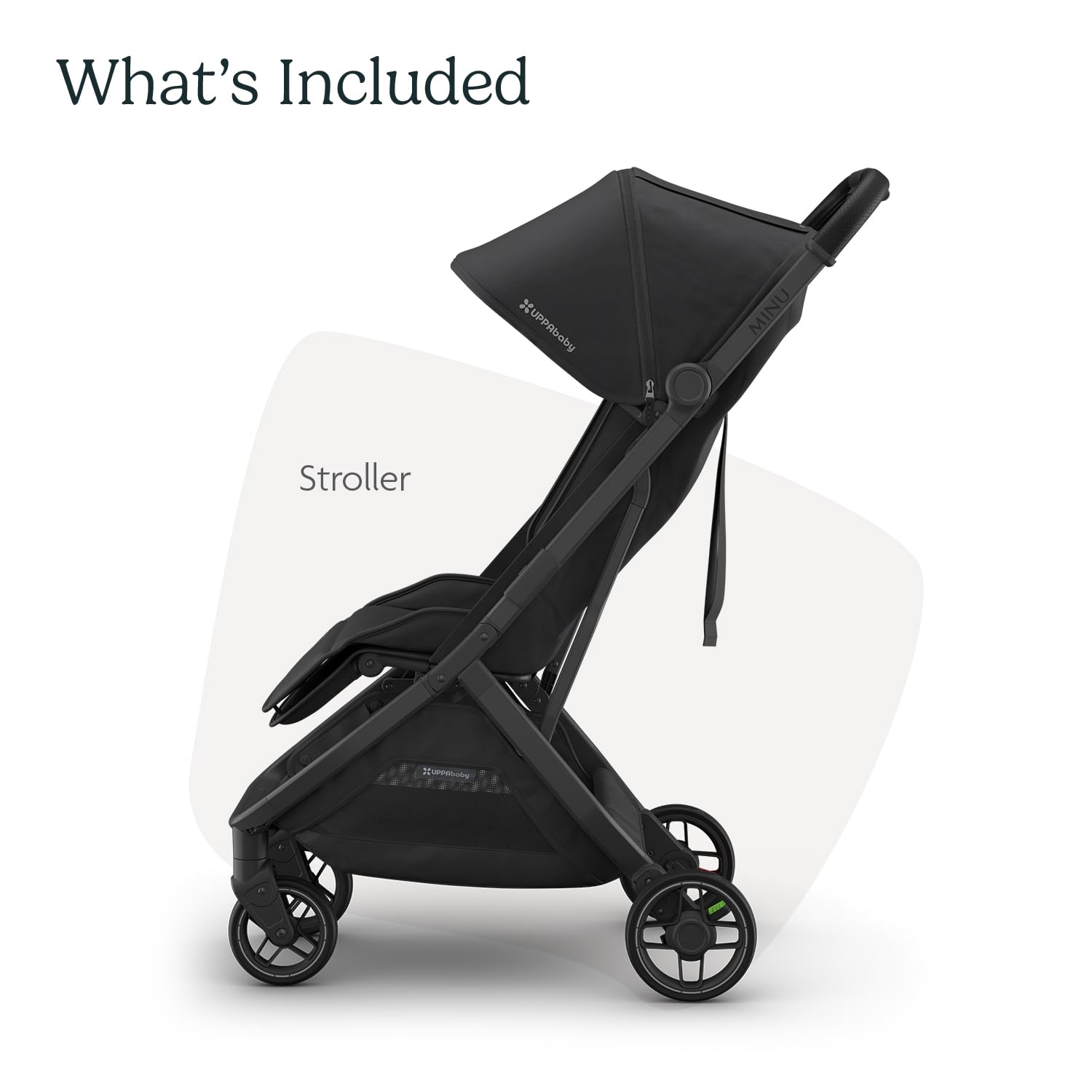
The UPPAbaby MINU V2 competes here directly. Published specs put it at 14.3 lbs with the seat, and owners report that the one-hand fold is genuinely fast rather than aspirationally described. The MINU V2 also benefits from the UPPAbaby ecosystem — car-seat adapters for Mesa and Mesa V2 compatibility exist, which matters if you’re building an integrated travel system rather than a standalone stroller. The Bump’s lightweight stroller roundup has included it as a recommendation for parents who want the UPPAbaby chassis experience without committing to the VISTA V2 footprint for travel.
Archetype 3: The Luxury Travel Object (15+ lbs, premium positioning)
Yes, some luxury travel strollers push past the overhead-bin weight limit. The Silver Cross Jet 3 (approximately 13 lbs) is the outlier that actually makes it — and it’s worth noting that Good Housekeeping’s stroller coverage has cited it as one of the few truly premium-finish options that also clears carry-on dimensions. The Cybex Eezy S Twist+ 2 falls into a similar tier of elevated-finish travel strollers that reviewers flag for parents who refuse to visually downgrade just because they’re at an airport.
If you’re in this tier, the honest tradeoff is that you’re sometimes trading true overhead-bin compatibility for “gate-check with confidence” — meaning a frame that’s compact enough to fit into a stroller travel bag, durable enough to survive cargo without damage, and visually premium enough that you don’t experience the moment as a loss.
The Ecosystem Question: Don’t Buy a Travel Stroller in Isolation
Here’s the thing that first-time travel stroller buyers almost always miss: the stroller you’re evaluating doesn’t exist in isolation. If you already own a full-size chassis — a VISTA V2, a Bugaboo Fox 5, a Nuna MIXX Next — you’re not replacing it with a travel stroller. You’re adding a second vehicle to a fleet. That changes the math considerably.
The ecosystem compatibility questions worth answering before you buy:
-
Does the travel stroller accept your infant car seat? The Babyzen YOYO² has an adapter ecosystem that accepts Cybex, Maxi-Cosi, and Nuna infant seats. The UPPAbaby MINU V2 works with Mesa adapters. The Bugaboo Butterfly accepts Cybex and Maxi-Cosi. If your primary car seat is a Doona or a Graco SnugRide, verify compatibility before assuming it transfers.
-
Does it take the same accessories you already own? Rain covers and footmuffs are almost never cross-compatible between brands, and sometimes not cross-compatible between models within the same brand. Buying a YOYO² when you’ve accumulated a Bugaboo accessory set means starting over.
-
What’s the resale story? This matters more than most people expect. Monitored sold listings on platforms like GoodBuy Gear and eBay show that Babyzen YOYO² and Bugaboo Butterfly units hold their value unusually well in the travel category — resale prices for lightly-used examples in current colorways typically land between 55–70% of retail, which is materially better than most full-size strollers. If you buy a travel stroller for one trip and then don’t need it again, that resale floor matters.
If X, Then Y: The Decision Framework
You’ve read the archetypes. Here’s how to close the decision.
If your child is under 6 months: You need a near-flat recline, which eliminates most true ultralights. The Bugaboo Butterfly or UPPAbaby MINU V2 with an infant car-seat adapter is the correct configuration. Verify adapter compatibility with your specific car seat model before purchasing.
If your child is a sitting toddler (12+ months) and you travel light: The Babyzen YOYO² is the consensus pick across multiple credible sources for good reason — the overhead-bin fit is reliable, the ride is better than the weight suggests, and the resale market is liquid. The GB Pockit+ All-Terrain is the right answer if you want to go lighter still and your toddler is past 18 months.
If you’re building an ecosystem and want brand consistency: Buy within your existing chassis family. The MINU V2 if you’re a UPPAbaby household, the Butterfly if you’re a Bugaboo household. The accessory and car-seat adapter compatibility dividends are real over time.
If you’re a gift-buyer: The Babyzen YOYO² is the safest gift in this category — it’s recognizable, it has a strong resale story if it turns out not to be the right fit, and it ships with a carry bag. The Bugaboo Butterfly is the right step-up if budget allows and you know the recipient already owns a Cybex or Maxi-Cosi infant seat.
If you refuse to compromise on handle ergonomics or visual finish: The Silver Cross Jet 3 is the stroller to evaluate seriously. It’s one of the few travel frames where owners report that the handle feel and build quality don’t read as a downgrade from their full-size daily driver.
The overhead bin is a constraint, not a sentence. The right travel stroller fits your child’s current developmental stage, connects to the accessory ecosystem you’ve already built, and boards the plane without you having to explain yourself to anyone.