July 12, 2026 • Margot Ellery • 10 min reading time • Prices verified June 13, 2026
Mockingbird vs. UPPAbaby Vista V3: Is the $600 Price Gap Justified?
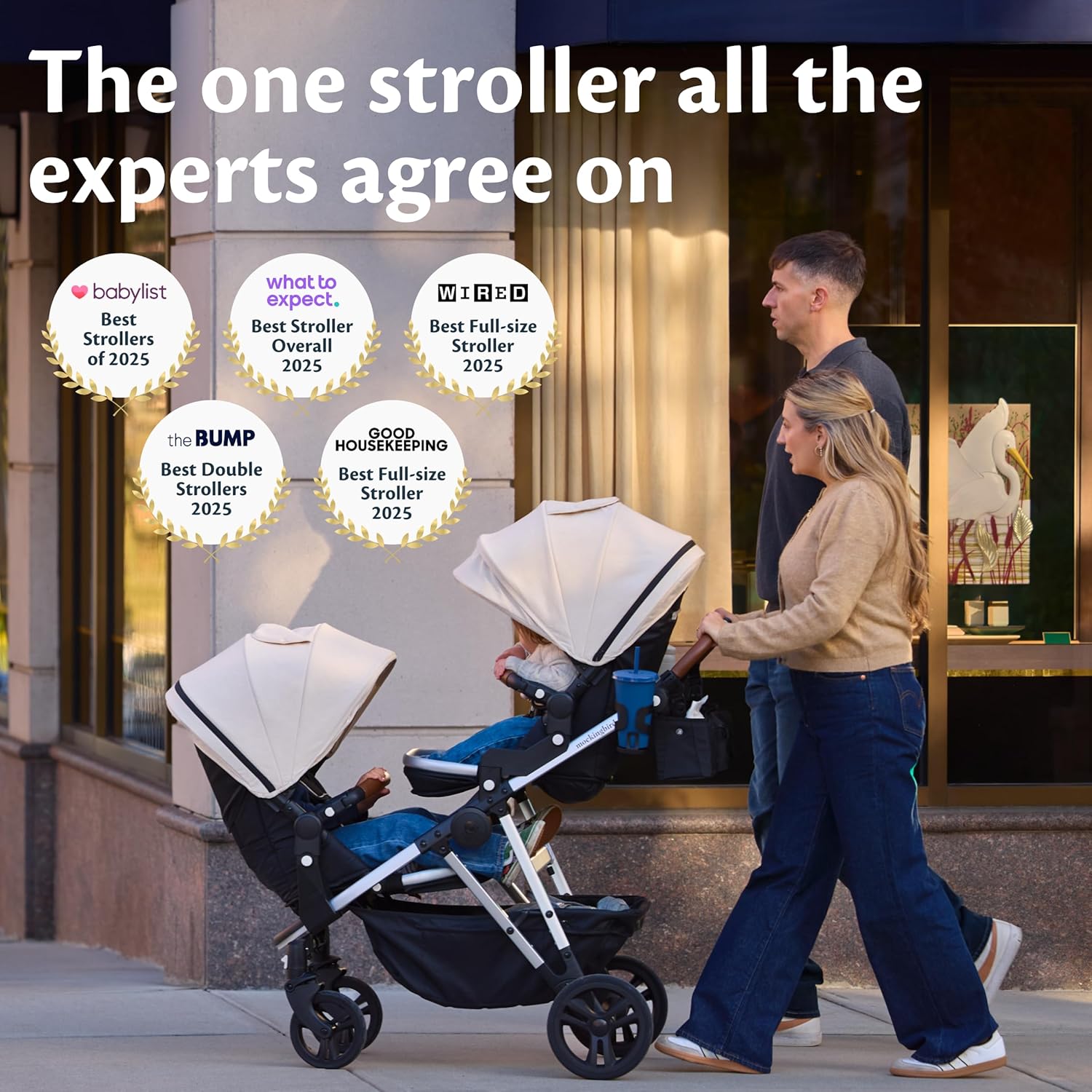
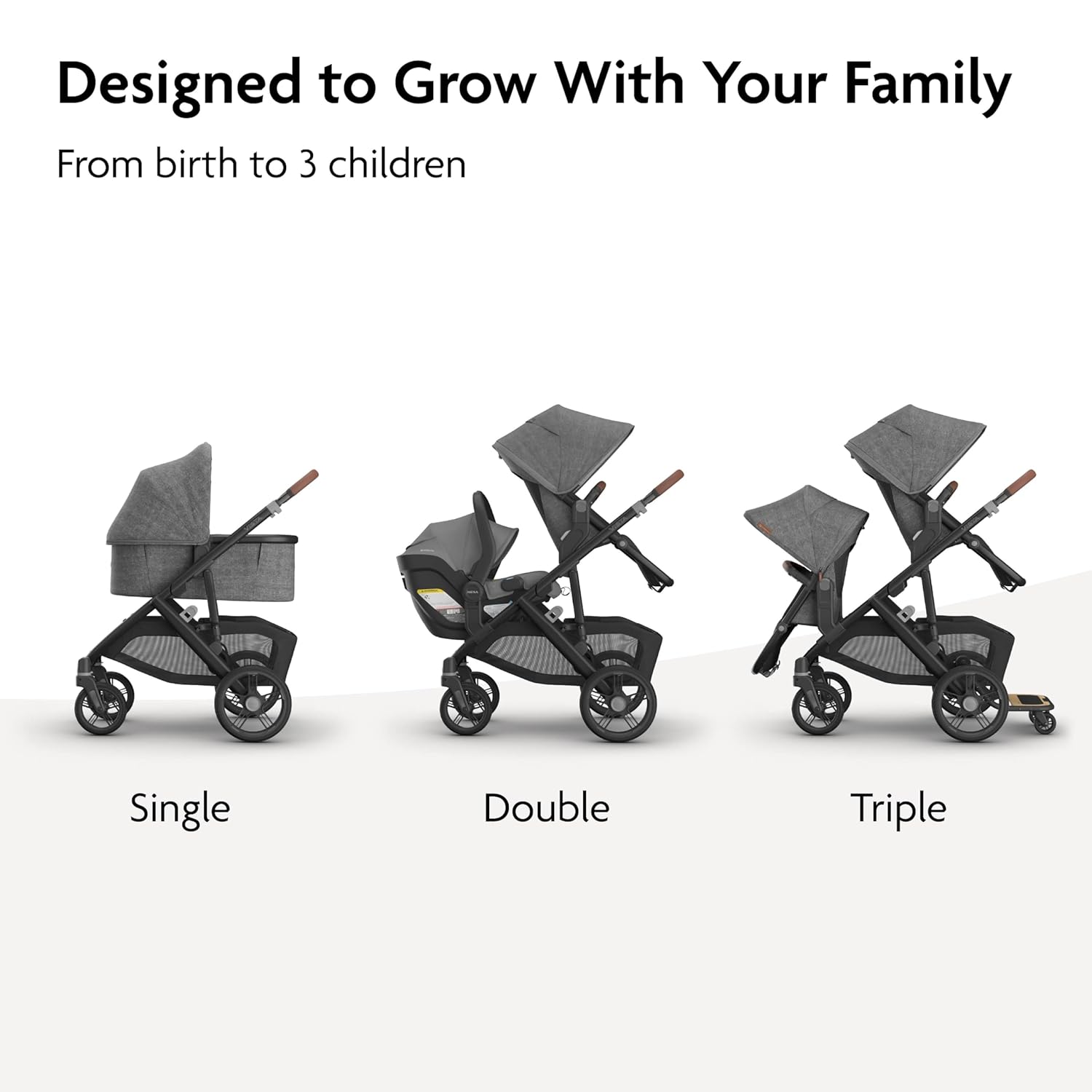
If you’re new to stroller research, here’s the lay of the land: a convertible stroller is one that starts as a single (one seat, one child) and can grow into a double (two children) by adding a second seat — which means you can buy it before baby number one arrives and not have to start over if baby number two shows up later. It’s the category that serious stroller shoppers gravitate toward, because it tries to solve the “I don’t want to own three strollers” problem. The two strollers in this article — the Mockingbird Single-to-Double and the UPPAbaby Vista V3 — are both strong answers to that brief. One costs roughly $550. The other costs roughly $1,100. Both attract buyers who’ve done their homework. This article’s job is to name the tradeoffs plainly, show the math on resale, and end with a clear decision rule so you don’t spend another three weeks on forums.
What You’re Actually Comparing
Let’s be precise about what this gap represents, because “a $600 price difference” sounds simple and isn’t.
The Mockingbird Single-to-Double (second generation) is a direct-to-consumer stroller — meaning the brand sells primarily through its own website rather than through a network of retail stores, which is a major lever for keeping the price down. The Vista V3 is UPPAbaby’s flagship convertible, sold through authorized retailers and carrying the full weight of UPPAbaby’s warranty infrastructure, retail relationships, and brand equity. That difference in distribution model explains a significant portion of the price gap before a single component is even compared.
Both strollers are designed to:
- Accommodate a newborn from day one (via bassinet, sold separately for both)
- Convert to a single-seat stroller
- Convert to a double configuration with a second child
- Accept infant car seat adapters so you can build a travel system — the setup where a car seat clicks directly onto the stroller frame without waking the baby
By the numbers:
| Feature | Mockingbird Single-to-Double | UPPAbaby Vista V3 |
|---|---|---|
| Base price (stroller only) | ~$550 | ~$1,100 |
| Weight | ~26 lbs | ~27.4 lbs |
| Configurations claimed | 10+ | 11+ |
| Included with base stroller | Seat, snack tray, rain cover | Seat, snack tray, rain cover, bug shield |
| Bassinet included? | No (~$200 separately) | No (~$230 separately) |
The weights are closer than most people expect. The real differences live elsewhere.
Where Each Stroller Fits: Three Buyer Profiles
The one-child or one-child-for-now buyer
If you’re purchasing for a single child — or treating the double configuration as insurance against a possible second — the Mockingbird’s value case is straightforward. You’re getting a well-built, aesthetically considered stroller with convertible capability built in, at a price that doesn’t require you to commit to a two-child future. Parents.com’s “Best Strollers for Newborns” 2025 roundup identifies the Mockingbird specifically as a strong option for buyers who want single-to-double flexibility without paying the full premium that flexibility commands at the Vista V3’s price point. The push quality and finish are consistently described by owners as punching above the stroller’s price — BabyGearLab’s 2025 “Best Strollers” roundup notes the Mockingbird’s ride quality as a genuine surprise for buyers coming from higher-priced competitors.
UPPAbaby
$899.99
In stock on Amazon
Check price on AmazonThe confirmed two-child family
For buyers who know a second child is either arriving or likely, the Vista V3’s defining feature comes into focus: the RumbleSeat configuration. The Vista V3 can run two full seats on the same frame with the children staggered — one seat sits lower and faces forward, the other sits higher and can face either direction. This matters because the alternative in most double strollers is a tandem setup where Child B sits almost directly behind Child A, which is cramped and — as documented consistently in long-form owner reviews cited by The Bump’s “Best Double Strollers” 2025 guide — creates friction between siblings around age two to three, when a toddler has strong opinions about personal space. The staggered layout is not a talking point. It’s a real ergonomic difference that shows up in daily life. Wirecutter’s “The Best Strollers,” updated 2025, flags the Vista’s two-seat configuration as a standout in the convertible category for this reason.
UPPAbaby
$999.99
In stock on Amazon
Check price on AmazonThe resale-conscious buyer
This is where the decision gets financially interesting, and where UPPAbaby’s brand equity becomes a concrete dollar figure. UPPAbaby strollers as a category are among the highest-retention items on the secondhand baby gear market — the Vista V2 (prior generation) has held resale values in the 55–65% of original retail range in good condition, which is a strong floor for baby gear. The Vista V3 is too new to have deep resale history, but the V2’s trajectory and UPPAbaby’s consistent brand recognition point toward similar retention.
The Mockingbird resells at roughly 40–50% of original retail in good condition — still respectable at its price point, and meaningfully better than most mass-market alternatives. But the net-cost math tells a more nuanced story:
- Vista V3 bought at $1,100, resold at 60% → ~$660 recouped. Net cost: ~$440.
- Mockingbird bought at $550, resold at 45% → ~$248 recouped. Net cost: ~$302.
On a net-cost basis, the gap shrinks from $550 to roughly $138 if you resell both strollers in good condition. And because the Vista V3 commands a higher absolute asking price on the secondary market, it also attracts a broader pool of buyers — which matters if you want to sell quickly rather than wait for the right buyer.
UPPAbaby
$999.99
In stock on Amazon
Check price on AmazonWhere the Vista V3 Earns Its Price Premium
BabyGearLab’s 2025 “Best Strollers” roundup and Wirecutter’s updated 2025 stroller guide both flag UPPAbaby’s ecosystem depth as a genuine differentiator — not marketing language. Here’s what that means in practice.
The V3 upgrade over V2. What to Expect’s editorial team covered the V2-to-V3 changes in their 2025 piece “UPPAbaby Vista V2 vs V3: What’s the Difference?” The V3 brings a redesigned handlebar (wider, more ergonomic), updated seat fabric, and revised suspension. Owners who’ve used both consistently report that the push feel is noticeably smoother on the V3 — not a transformative leap, but the kind of improvement you notice every day on a morning walk. If you’re considering a used V2, that’s a real tradeoff to weigh against the price difference.
Assembly and the video caveat. A recurring theme in Vista V3 owner reviews noted in Good Housekeeping’s “Best Strollers of 2025” roundup: the printed manual is confusing enough that owners routinely recommend skipping it and going straight to video walkthroughs. This isn’t a dealbreaker, but it’s worth knowing before 9 p.m. the night before your baby shower. The Mockingbird, by contrast, generates consistent praise for fast, intuitive assembly — owners report getting it road-ready in under 20 minutes without external help.
Ecosystem breadth. UPPAbaby’s accessory and adapter ecosystem is extensive and widely recognized. Bassinets, bug shields, car-seat adapters for Nuna Pipa, UPPAbaby Mesa, Chicco KeyFit, and Graco SnugRide are all documented on UPPAbaby’s published compatibility list. For buyers who want to grab a second car seat adapter or a replacement part three years from now, UPPAbaby’s retail presence makes that straightforward. The Mockingbird’s adapter ecosystem is more limited in breadth but covers the major infant car seats — the universal adapter is confirmed compatible with Graco SnugRide SnugFit 35 and the Nuna Pipa series per Mockingbird’s published fitment guide.
Where the Mockingbird Holds Its Own
Real-world configurations. The “10+ configurations” figure deserves a reality check. In daily use, most owners cycle through about three to four setups: single seat forward-facing, single seat with infant car seat, bassinet mode for a newborn, and eventually the double configuration. The large configuration number includes direction variations and recline combinations that matter situationally but aren’t daily drivers. This is equally true of the Vista V3’s configuration count — the number signals maximum flexibility, not what you’ll use on a Tuesday school run.
Direct-to-consumer value. The Mockingbird’s price reflects a distribution model that cuts out retail margin. Owners consistently describe the stroller as feeling more expensive than it is — the frame finish, the fabric quality, and the push mechanics all land above what the price tag suggests. Good Housekeeping’s 2025 stroller roundup notes this as one of the Mockingbird’s most frequently cited owner observations.
The single-child scenario, restated. Parents.com’s 2025 roundup is specific on this point: for buyers purchasing their first stroller with no certainty about a second child, the Mockingbird removes the financial penalty of buying optionality. You can add the second seat if you need it. You don’t pay for it until you do.
Frequently Asked Questions
Does the Mockingbird adapter work with Graco SnugRide SnugFit car seats? Yes — Mockingbird’s universal adapter is confirmed compatible with Graco SnugRide SnugFit 35 and SnugFit 35 XT seats per Mockingbird’s published compatibility guide. Always verify against the most current chart on Mockingbird’s website before purchasing, as adapter generations can affect fitment.
Can the Vista V3 fit two full seats without the kids being directly stacked? Yes, and this is the Vista V3’s defining two-child feature. The RumbleSeat mounts at a higher, forward position while the main seat sits lower, creating a staggered layout rather than a true tandem. Both children have sightlines and personal space. The Bump’s “Best Double Strollers” 2025 guide identifies this as the configuration that drives the most consistent long-term owner satisfaction.
Is the Vista V3 worth upgrading from a V2? For buyers purchasing new: yes, with the caveat that the improvements are quality-of-life refinements rather than functional leaps. What to Expect’s 2025 editorial on the V2-to-V3 differences confirms the handlebar and suspension updates are real, and owners who’ve used both notice them. For buyers considering a used V2 at significant discount: the V2 remains a capable stroller and may not justify paying full new retail for the V3’s incremental gains.
How many configurations does the Mockingbird actually offer in daily use? Three to four for most families: newborn bassinet, infant car seat mode, single seat (forward and rear-facing), and eventually the double configuration. The published 10+ figure is technically accurate but counts seat direction and recline combinations used situationally.
Which stroller has better resale value if we only plan one child? The Vista V3 holds a higher percentage of retail value and commands a higher absolute resale price, making it easier to sell. But on a net-cost basis — what you spend minus what you recoup — the gap between the two strollers is roughly $140–$200 in actual out-of-pocket cost if both are resold in good condition. If ease and speed of resale matters, the Vista V3’s brand recognition gives it a real advantage.
The Decision Rule
Choose the Mockingbird if: You’re buying for one child (or treating the second-child configuration as insurance rather than a plan), you want maximum stroller for minimum spend, and you’re comfortable with a direct-to-consumer brand that has earned its reputation over the last five years but doesn’t carry the same secondary-market recognition as UPPAbaby.
Choose the Vista V3 if: You’re confident a second child is coming and the staggered RumbleSeat configuration is a feature you’ll actually use — or if resale value and ecosystem depth matter enough to justify the premium. The V3’s net cost after resale is lower than the sticker price suggests. The staggered double is genuinely better than what most competitors offer at any price. And UPPAbaby’s brand recognition, on any given school run or secondhand-market listing, is not nothing.
The $600 gap is real. But it’s not simply what you’re paying for a stroller — it’s what you’re paying for the ecosystem, the resale floor, and the specific two-child configuration that makes the Vista V3 the stroller owners describe, three years in, as worth every penny.