August 9, 2026 • Margot Ellery • 9 min reading time • Prices verified June 13, 2026
The Best Travel Systems Under $700 That Don't Feel Like a Compromise
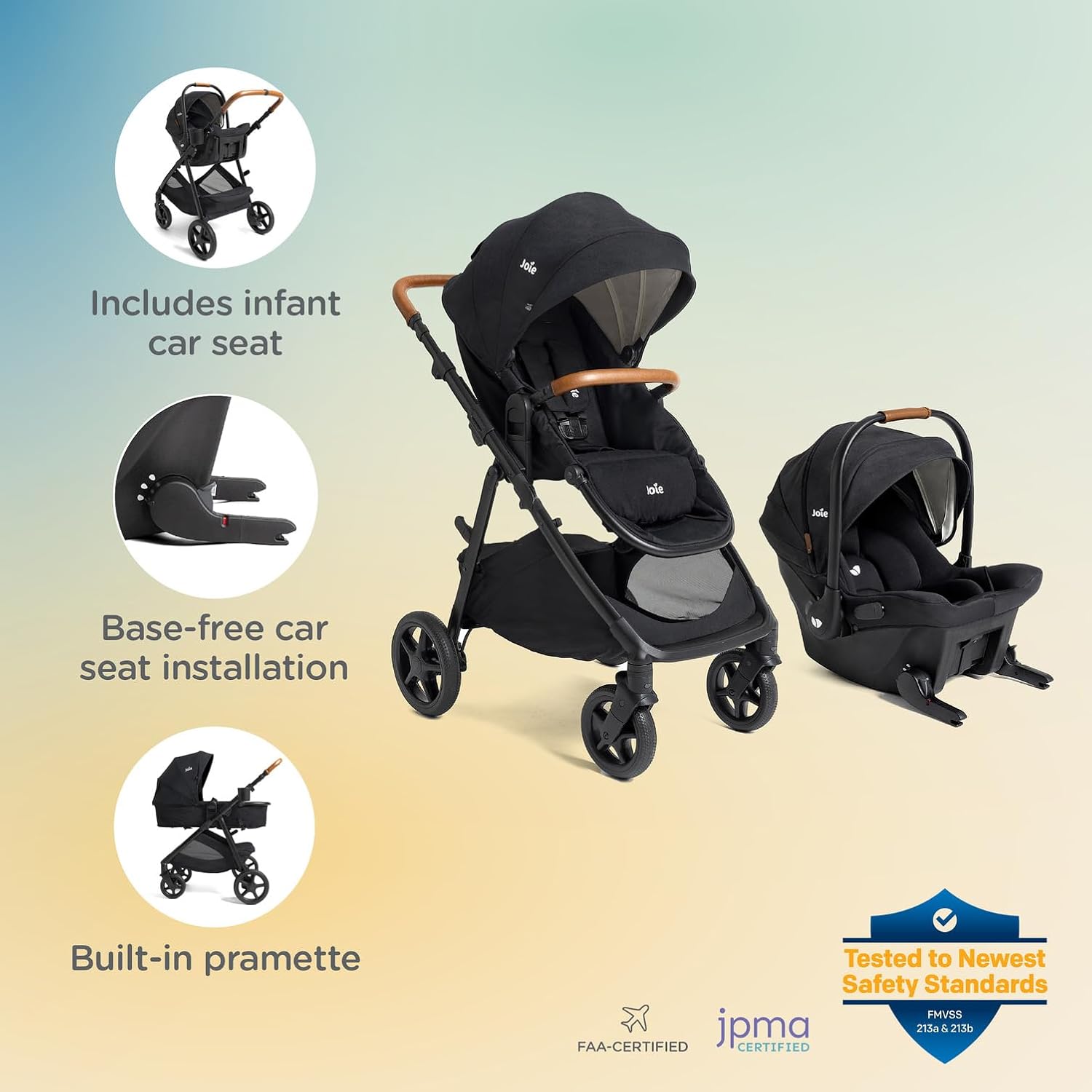
If you’ve ever Googled “travel system stroller” and immediately felt like you’d wandered into a foreign language — you’re not alone. Here’s the plain-English version: a travel system is a stroller and an infant car seat sold together (or paired by the manufacturer) so they click into each other without an adapter. You snap the car seat off its base in the car, click it onto the stroller frame, and push. Baby never wakes up. That’s the whole dream. The car seat also stays rear-facing in the car — which is the safest position for infants — and typically covers your child from birth until they outgrow it somewhere between 22 and 35 pounds depending on the model. A travel system replaces the need to buy a stroller and car seat separately, negotiate compatibility, and hope nothing wobbles. At the premium end of this category, bundles can push past $1,400. But the under-$700 tier has quietly gotten very good, and that’s exactly what we’re unpacking here.
What “Under $700” Actually Gets You in 2026
Let’s set expectations honestly, because this is where a lot of buyers miscalibrate. The $700 ceiling isn’t the mid-range anymore — it’s a real ceiling that separates solid, long-life gear from luxury-tier stuff. What you give up above that line: mostly magnesium alloy frames, leather-wrapped handlebars, fashion-house collaborations, and the kind of suspension engineering that makes a Bugaboo Fox 5 feel like a sports car on cobblestones. What you keep: safe, rigorous car-seat engineering (federal FMVSS 213 standards apply to every car seat sold in the US regardless of price), durable stroller frames, and — at the better end of this tier — features like one-hand fold, reversible seats, and genuine resale value.
The key word in this article’s title is compromise. Not “zero tradeoffs ever” — but “no tradeoffs that will bother you daily.” Consumer Reports’ stroller buying guide notes that many safety-critical features don’t improve meaningfully above a certain price point; what scales with price is primarily ride quality, materials, and aesthetic refinement. The Wirecutter’s best stroller review echoes this, consistently recommending sub-$700 options to readers who ask for “good enough to love” rather than “best ever made.”
By the numbers:
| System | Street Price (May 2026) | Car Seat Weight Limit | Stroller Weight |
|---|---|---|---|
| Graco Modes Pramette Travel System | ~$430 | 35 lb | 28 lb |
| Chicco Bravo LE Trio | ~$500 | 30 lb | 19.5 lb |
| UPPAbaby Aria + Minu V2 | ~$650 | 35 lb | 14.1 lb (stroller only) |
| Nuna PIPA RX + TRIV Next | ~$690 | 32 lb | 17.5 lb (stroller only) |
Prices reflect major authorized-retailer averages as of May 2026. Weights are manufacturer-rated.
The Contenders Worth Your Time
Graco Modes Pramette Travel System (~$430): The Rational Default
If you’re approaching this like a considered purchase rather than a status signal, the Graco Modes Pramette is genuinely hard to argue with. The stroller offers 12 riding configurations — including a pram-style fully-flat newborn mode (a “pram” position means baby lies completely horizontal, which is recommended for young infants whose spine isn’t yet ready for a sitting position) — which is unusual at this price. The included SnugRide 35 Lite LX infant car seat is rated to 35 pounds, giving you longer-than-average infant-seat longevity before you transition to a convertible.
What to Expect’s roundup of travel system strollers highlights the Modes Pramette specifically for families who want pram functionality without buying a separate bassinet attachment. Owners across aggregated reviews consistently flag the push quality as smooth for a budget frame, and the stroller accepts the SnugRide click-in without an adapter. The tradeoffs are real: at 28 pounds, this stroller is heavy, the fold is two-handed, and the frame won’t win any design awards. If you’re urban and doing a lot of stair-carrying, that weight matters. If you’re suburban and mostly loading a trunk, it probably doesn’t.
If X, then Y: If your priority is maximum features-per-dollar and you’re not worried about resale, the Graco is your pick.
Chicco Bravo LE Trio (~$500): The Compact Upgrade
The Bravo LE Trio pairs Chicco’s KeyFit 30 Zip car seat — which BabyGearLab has consistently ranked near the top of their infant car seat category for ease of installation and harness adjustability — with a nimbler stroller frame. At 19.5 pounds, it’s meaningfully lighter than the Graco, and the KeyFit’s anti-rebound bar (a stabilizing component that reduces the seat’s rotation in a rear-end collision) is a genuine safety feature that earns its mention.
The stroller seat fully reclines, accepts the KeyFit without an adapter, and folds in one step. Good Housekeeping’s travel system review calls out the Bravo’s maneuverability in tight spaces as a consistent owner-reported strength. The limitation: the KeyFit 30 caps out at 30 pounds, which is below the Graco’s 35-pound ceiling — so you may transition to a convertible car seat a few months earlier. For many families that’s a non-issue; for parents who travel frequently and want to maximize time in the infant seat (which typically includes a stay-in-car base that makes airport and rideshare transfers much easier), that 5-pound gap is worth knowing.
If X, then Y: If you want lighter weight, easier fold, and a car seat with a strong installation track record — and you’re comfortable with the 30 lb cap — the Chicco Bravo LE Trio is the sweet spot in the mid-$400s.
UPPAbaby Aria + Minu V2 (~$650): The Brand-Ladder Entry Point
This is the most strategically interesting option in the under-$700 bracket, and it requires a bit of context. UPPAbaby is the brand that anchors the top of the mid-range — the VISTA V2 and Cruz V2 are the reference points that most premium stroller conversations orbit around. The Aria is UPPAbaby’s infant car seat, and the Minu V2 is their compact travel stroller; together they land just under the $700 line at most authorized retailers as of May 2026.
Why does the brand name matter? Two reasons: ecosystem and resale. On ecosystem: if there’s any chance you’ll add a second child and want a VISTA V2 (which can accommodate two children with a second seat and a bassinet), the UPPAbaby car seat and toddler seat both work within that ecosystem without new adapters. The Wirecutter specifically notes UPPAbaby’s ecosystem cohesion as a reason to consider the brand early even if your first purchase is modest. On resale: per sold listings tracked on GoodBuy Gear as of early 2026, UPPAbaby gear holds resale value more aggressively than most competitors in this tier — the VISTA V2 commonly sells secondhand at 55–65% of original retail; the Minu V2 and Aria, while newer to the secondhand market, appear to follow a similar curve.
The Minu V2 is genuinely light (14.1 lb stroller only) and folds compactly enough for overhead bin storage on many airlines — a category feature most strollers in this bracket can’t claim. Owners consistently report that the push quality punches above the price. The tradeoff is that the Minu V2 is a compact travel stroller, not a full-size frame — its canopy is smaller, its basket is modest, and for parents who prioritize all-day urban pushing over packability, the full-size alternatives may feel more substantive day-to-day.
If X, then Y: If you think you’re likely to buy into the UPPAbaby ecosystem long-term, or if you travel frequently and need airline-friendly packability, the Aria + Minu V2 is the most future-proofed purchase in this tier.
Nuna PIPA RX + TRIV Next (~$690): The Design-Conscious Near-Premium
Nuna occupies an interesting position: it’s priced and positioned one step below Bugaboo and Stokke, but its aesthetic and material quality read closer to that tier than to Chicco or Graco. The PIPA RX is a standout infant seat — it’s one of the few in this price range to include a load leg (a support leg that extends to the vehicle floor, absorbing crash energy and measurably reducing chest compression in frontal impacts, per IIHS testing data cited in BabyGearLab’s infant car seat roundup). The TRIV Next stroller is slim enough to fit through standard doorways single-file, folds in one motion, and the colorway options (Caviar, Hazelwood, Riveted) are genuinely considered — not an afterthought.
The Bump’s travel system roundup identifies the PIPA RX specifically as the infant seat they’d recommend for parents who want to maximize passive safety features, and the TRIV Next consistently draws positive owner commentary around handlebar height and push feel. At ~$690, this is the ceiling of the under-$700 bracket, and it shows: the compromise here is that you’re getting a more design-forward, safety-forward package with less stroller frame for the money — the TRIV Next is compact and capable, but not as feature-rich as the Graco Modes Pramette’s 12-configuration platform.
If X, then Y: If aesthetics, brand positioning, and the load-leg safety feature are your primary decision drivers, the Nuna pairing is the one that won’t feel like a consolation prize next to a neighbor’s Bugaboo.
How to Make the Call
You’ve got four credible options at four different price points with four different priority stacks. Here’s the decision framework in plain terms:
Go Graco if your priority is maximum feature-set per dollar and resale value is secondary. Heavy but capable; best for car-centric families with storage space.
Go Chicco if you want the lightest, most manageable package under $500 and the KeyFit’s installation ease matters to you — it does for many first-time parents navigating car-seat bases solo.
Go UPPAbaby if you’re already planning to invest in the wider ecosystem, you travel by air with any regularity, or you’re buying with resale in mind. The long-term math often favors premium-tier resale over budget-tier convenience.
Go Nuna if you’re at the top of your budget and the combination of the load-leg safety feature and a more elevated aesthetic justifies the last $40 before you hit the ceiling.
One practical note that Consumer Reports’ buying guide emphasizes and is worth repeating: whatever system you choose, register your car seat with the manufacturer immediately after purchase. Registration is how you receive recall notices — and car seat recalls, while infrequent, do happen across every brand at every price point. That’s not a reason for anxiety; it’s just the one admin task that matters.
The under-$700 travel system market in 2026 is genuinely competitive. None of these picks feel like settling — they feel like making a deliberate choice about which tradeoffs matter to your life. That’s the right frame.