August 8, 2026 • Margot Ellery • 10 min reading time • Prices verified June 13, 2026
Three Kids, One Stroller: How Real Families Solve the 'Three Under Four' Problem
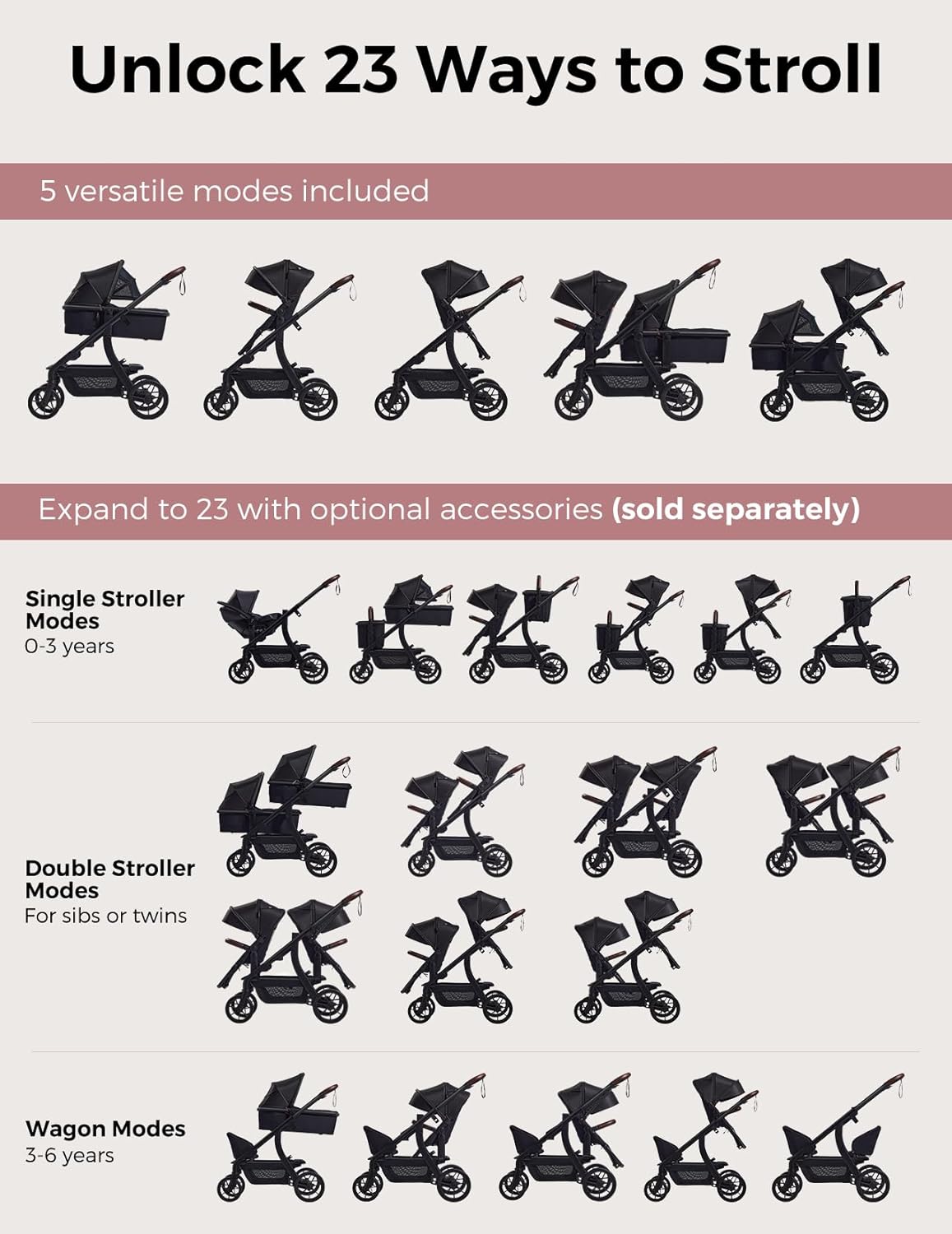
Let’s be honest about what “three under four” actually means in daily life: you have a newborn, a one- or two-year-old who nominally walks but absolutely will not when you need them to, and a three-year-old who still melts down a solid three times a week. You need to get all three human beings from Point A to Point B without losing one of them or your mind. A stroller — in this context, a wheeled frame that can accommodate multiple children simultaneously — stops being a convenience item and becomes something closer to infrastructure. This article is for parents who are past the “do I even need a double stroller?” phase (spoiler: you do) and are trying to make a smart, durable, logistically sound decision for a genuinely complicated real-world situation.
Here’s the framework: the “three kids” problem almost never means a true triple stroller. It usually means a two-child stroller chassis that also handles a third kid who is old enough to walk independently — most of the time. The solution space is smaller than it looks, the tradeoffs are sharper than the marketing suggests, and there’s a predictable social pressure pattern that almost every family in this situation runs into. Let’s work through it.
| EDITOR'S PICKMomcozy ChangeGo Baby Stroller | Mid-tierGraco Ready2Grow 2.0 Double Str… | Budget pickBaby Trend Sit N' Stand Tandem… | |
|---|---|---|---|
| Seats | 1 (converts to 2) | 2 | 2 |
| Configurations | 23 | — | — |
| Standing platform | — | ✓ | ✓ |
| Bench seat | — | ✓ | — |
| Carry-cot included | ✓ | — | — |
| Cup holders | — | — | ✓ |
| Price | $649.99 | $299.00 | $209.99 |
| See on Amazon → | See on Amazon → | See on Amazon → |
The Social Pressure Pattern (And Why You Should Ignore It)
Almost universally, parents who buy a double or multi-kid stroller report the same experience: friends, relatives, and strangers in baby forums told them it was unnecessary. “The older one can walk.” “You don’t need that thing.” “It’ll just take up space.” Then the stroller arrived, and those same parents became its loudest advocates.
This pattern shows up consistently across aggregated owner reviews on BabyGearLab and Good Housekeeping’s double stroller roundups. The disconnect is real: the people giving advice are imagining a controlled outing to a quiet park, while the actual parent is trying to manage a pediatrician appointment, a grocery run, and a preschool pickup in the same afternoon, in February, with a toddler who just decided walking is for other people.
If you are being told by well-meaning people that you don’t need a double stroller for three kids under four, file that advice appropriately and keep reading.
The Three Configurations Worth Considering
1. The Tandem Sit-and-Stand: Graco Ready2Grow and Baby Trend Sit N’ Stand DLX
A tandem stroller — meaning one seat in front of the other rather than side by side — with a sit-and-stand platform (a rear deck where an older child can stand or perch on a small seat) is the most flexible configuration for a family where one child is 3+ years old.
The Graco Ready2Grow is the reference product in this category. Owners consistently describe it as the solution for apartment living specifically: it folds compactly enough to store inside a third-floor unit without commandeering the entire entryway, and its footprint in an elevator is meaningfully smaller than a side-by-side double. One owner profile that circulates widely in parenting communities describes exactly this scenario — three kids in three years, third floor, multiple daily uses — and calls it “this is the one.” That’s not hyperbole for a stroller at this price point; it’s a genuine usability verdict from someone running a real operational gauntlet.
The Baby Trend Sit N’ Stand DLX generates a different kind of owner surprise: multiple reviewers report that it folds smaller than their previous single stroller, which reads as implausible until you look at the spec sheets. The folded dimensions are genuinely compact for a stroller with this much capacity. That said, before making purchase decisions based on that claim, it’s worth cross-referencing the published specs directly — the claim is consistent across owner testimony but worth verifying against current model specs, as Baby Trend has updated the Sit N’ Stand line more than once.
The tradeoff to name explicitly: tandem strollers are narrower (fits through more doorways), but the rear seat or standing platform is a worse experience for the child in it than the front seat. On a sit-and-stand, the older child is standing — which works great for kids who are genuinely “sometimes I’ll ride, mostly I’ll walk” — but a tired, cranky three-year-old who wants to sit for 45 minutes will be miserable on a platform with no back support. Know your kid.
2. The Side-by-Side Double: When You Have Two Young Children and Need Reliable Seating
If your situation is a newborn and a toddler under two — meaning both children genuinely need a seated position, neither is ready to stand or reliably walk — a side-by-side double stroller (seats arranged next to each other rather than front-to-back) is often the better fit than a tandem.
Side-by-sides give each child equal sightlines, equal recline access, and equal access to the canopy. The tradeoff: they’re wider, and some older urban doorways don’t accommodate them. The Wirecutter’s double stroller coverage and BabyGearLab’s extensive category testing both note that the side-by-side vs. tandem decision is primarily a doorway and elevator question — if you live in a building with a standard modern elevator and shop at stores with automatic doors, the width is rarely a real problem. If you’re navigating pre-war elevator dimensions or a neighborhood with boutique shop doors, measure before you buy.
3. The Modular Chassis Plus Kickboard: Mockingbird Triple and the 3.0 Upgrade Path
The Mockingbird brand has built significant owner loyalty in this space specifically because of its modular approach. The Mockingbird 3.0 — the current chassis configuration — supports a second seat, a bassinet, and a kickboard attachment that allows a third child to ride standing behind the primary seat area.
The kickboard pattern that owners describe is very specific and worth naming: the older child (usually 3–5 years old) doesn’t want to be strapped into a stroller seat — that’s babyish — but also absolutely does not want to walk the entire distance to the farmers market. The kickboard is a face-saving middle ground. They ride when they want, step off when they feel like it, and nobody has to negotiate a meltdown.
Owners across The Bump’s editorial coverage and parents.com’s sit-and-stand roundup note that the kickboard holds a child’s full weight reliably at typical toddler and preschool weights, though the manufacturer’s rated weight limit should always be the governing number — published specs put Mockingbird’s kickboard capacity in a range appropriate for young children; verify against the current spec sheet for the specific configuration you’re ordering.
By the Numbers
| Configuration | Approximate Folded Width | Fits Standard Sedan Trunk | Key Tradeoff |
|---|---|---|---|
| Graco Ready2Grow (tandem) | ~25 in wide folded | Yes, for most mid-size sedans | Rear child has limited seating comfort |
| Baby Trend Sit N’ Stand DLX | ~23 in wide folded | Yes | Verify current specs; varies by model year |
| Standard side-by-side double | ~29–31 in wide | Tight in compact sedans; better in SUVs | Doorway width in older buildings |
| Mockingbird chassis + kickboard | ~25 in wide | Yes | Kickboard works best for 3+ years old |
Published specs sourced from manufacturer product pages; trunk fit varies by vehicle. Verify before purchasing.
Trunk Reality: Sedans vs. SUVs
This is where a lot of families get surprised. Full-size double strollers — particularly side-by-sides — fold to dimensions that fit comfortably in an SUV or minivan cargo area but compete for space with diaper bags, groceries, and general chaos in a sedan trunk. Wirecutter’s double stroller coverage specifically flags this as the most common buyer regret in owner feedback: “I didn’t realize how big it would be in the car.”
The practical frame: if you drive a compact or mid-size sedan and you’re buying a side-by-side double, sit with the folded dimensions before you commit. If you drive a crossover, mid-size SUV, or minivan — the “minivan of strollers” framing that one owner used to describe the Graco Ready2Grow is apt — you’ll have meaningful trunk flexibility.
Frequently Asked Questions
Can the Graco Ready2Grow fit in a standard apartment elevator and fold compactly enough for third-floor living? Owners in urban apartment settings consistently report that it can. Its tandem (front-to-back) configuration makes it narrow enough for most standard elevator cabs, and its folded form is compact enough to store inside an apartment unit. That said, elevator dimensions vary significantly in older buildings — measure your cab before ordering.
Does the Baby Trend Sit N’ Stand hold an infant car seat in the rear seat, and which brands fit? The Sit N’ Stand line does include infant car seat compatibility in the rear-facing position, but brand compatibility varies by model year. Baby Trend publishes a compatibility chart on their site; cross-reference it with your specific car seat brand and model before buying. Universal fit is not guaranteed.
At what age can the oldest child reliably use the standing platform instead of a seat? Most owners and pediatric occupational therapists referenced in parents.com’s coverage suggest that children develop the balance and stamina for a standing platform reliably around 2.5 to 3 years, though individual variation is significant. A child who is confident on their feet, can hold on when the stroller moves quickly, and will actually let you know when they’re tired is a good candidate. A child who is still wobbly on uneven ground is not.
Is a sit-and-stand stroller or a side-by-side double better for a newborn plus a 2-year-old? For a newborn and a two-year-old specifically — where the 2-year-old still needs genuine seated support for longer outings — a tandem with a full rear seat (not just a standing platform) tends to serve the two-child mix better than a pure sit-and-stand. The Graco Ready2Grow accommodates this because its rear position supports both a standing platform and a jump seat. A pure side-by-side is also a strong option if doorway width isn’t a constraint.
Does the Mockingbird kickboard attachment hold a child’s full weight reliably? Owner feedback across multiple review aggregations suggests yes, within the rated weight limits. The kickboard is not an afterthought attachment; it’s an integrated part of the Mockingbird modular system. Verify the current weight capacity spec for the Mockingbird 3.0 kickboard against your child’s weight before purchasing — rated limits are published by the manufacturer.
How do full-size double strollers fit in standard sedan trunks versus SUVs? Standard side-by-side doubles (folded width typically 29–31 inches) are tight or impractical in compact and mid-size sedan trunks and fit well in SUV and minivan cargo areas. Tandem strollers fold narrower and are generally more sedan-friendly. This is one of the most common sources of buyer regret in aggregated double stroller owner reviews — it’s worth measuring your trunk opening before committing.
The Decision Rule
Here’s the “if X, then Y” frame:
- If you live in an apartment above the first floor and/or drive a sedan → prioritize folded dimensions and tandem configuration. The Graco Ready2Grow is the validated reference point.
- If your two youngest are both under 18 months and both need full seating → a side-by-side double with two full reclining seats is the right call. Measure your doorways first.
- If your oldest is 3+ and already somewhat independent but has “I don’t wanna walk” days → a modular chassis with a kickboard (the Mockingbird 3.0 configuration) fits the behavioral reality better than forcing them into a seat or fighting them on the sidewalk.
- If someone tells you that you don’t need a double stroller → thank them warmly and buy the stroller. The owners who ignored that advice are, across the board, glad they did.