August 19, 2026 • Margot Ellery • 9 min reading time • Prices verified June 13, 2026
Car Seat Adapter Compatibility: Stop Guessing Which One Fits Your Stroller
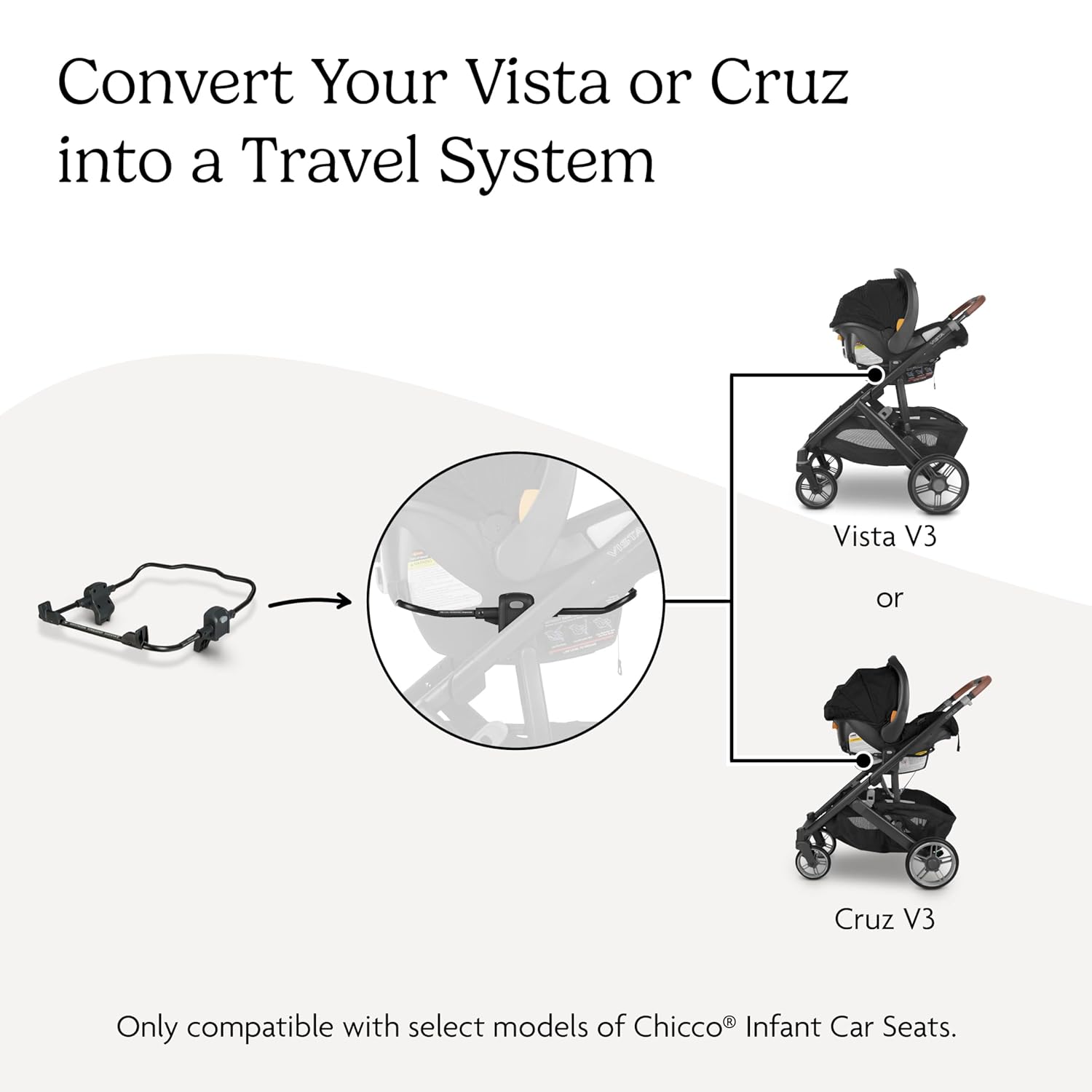
Here’s a scenario that plays out constantly in parenting forums and buy-nothing groups: someone orders a car seat adapter — the small bracket that clips an infant car seat (the removable bucket-style seat your newborn rides in) directly onto a stroller frame, skipping the hassle of buckling and unbuckling a sleeping baby — and it arrives two days before their due date. They pull it out of the box, hold it up to the stroller, and realize immediately that it does not fit. Not even close. The clips are the wrong width. The locking arms point the wrong direction. The brand name on the adapter matches the stroller brand, but the model year doesn’t. Back it goes. This guide exists to make sure that doesn’t happen to you. By the end, you’ll know exactly how compatibility works, why it fails, which combinations are bulletproof, and how to make a final decision with confidence — whether you’re buying new, buying secondhand, or inheriting a hand-me-down frame.
| EDITOR'S PICKBOB Gear® Single Jogging Stroll… | Mid-tierUPPAbaby Car Seat Adapter for C… | Budget pickUPPAbaby Car Seat Adapter for M… | |
|---|---|---|---|
| Brand | BOB | UPPAbaby | UPPAbaby |
| Car seat fit | Graco | Chicco | Maxi-Cosi, Nuna, Cybex |
| Stroller fit | BOB single jogging | Vista & Cruz | Vista V2/V3, Cruz V2/V3 |
| Units | — | 1 | 1 pair |
| Dimensions | — | — | 5.5x2.5x8.25 in |
| Price | $99.99 | $49.99 | $49.98 |
| See on Amazon → | See on Amazon → | See on Amazon → |
Why Adapter Compatibility Is More Complicated Than It Looks
The short version: stroller manufacturers and car seat manufacturers are different companies, working on different product cycles, and they don’t always coordinate as neatly as marketing materials suggest.
A travel system — the term for a matched stroller-plus-infant-car-seat combo sold together or designed to work together — sounds like a solved problem. And it is, when you buy the bundle the manufacturer intended. Chicco sells its KeyFit 35 with its Bravo stroller; Graco sells its SnugRide with its Modes stroller. Inside those ecosystems, compatibility is usually seamless because the adapter (often included or sold by the same brand) is engineered to spec.
The complications begin in three situations:
-
You have a premium stroller chassis and a different-brand car seat. You bought a UPPAbaby Cruz V2 or a Bugaboo Fox 5 because you love the ride quality and the design, and you separately chose a Nuna PIPA rx or a Cybex Cloud G because it rated highest for safety. Now you need a third-party adapter to bridge them.
-
You’re working with a previous model year. Stroller frames are updated on roughly 18–36 month cycles — sometimes with meaningful changes to the adapter rail geometry, sometimes with cosmetic refreshes that still break backward compatibility. The adapter that fit a Cruz V2 (2020–2024) does not necessarily fit a Cruz V3 (2025).
-
You bought or received a secondhand stroller. The adapter that came with it may be for a different car seat than the one you own, or it may be a generation behind.
BabyGearLab’s travel system coverage consistently flags this as one of the most common sources of buyer frustration: parents who research strollers and car seats independently, buy both, and only discover the adapter gap at the last step.
The Four Variables That Determine Fit
Every compatibility question comes down to four things. Get all four right and the adapter will click in cleanly. Miss any one of them and you’re returning something.
1. Stroller brand and model name. Not just “UPPAbaby” — specifically Cruz, VISTA, Ridge, or Minu, because these all use different adapter rail designs. A VISTA V2 adapter will not fit a Cruz V2.
2. Stroller model year (or generation label). This is the one most people miss. Manufacturers sometimes use “V2” or “V3” labels, but some brands (Bugaboo, Stokke) use year designations. The rail attachment points can change between generations even when the stroller looks nearly identical from the outside. Check the serial number plate on the frame — it’s usually on the underside of the chassis near the rear axle — and cross-reference it with the manufacturer’s compatibility chart.
3. Car seat brand and model name. Again, specificity matters. Nuna makes the PIPA, PIPA rx, PIPA urbn, and PIPA lite — all slightly different mounting geometries, all requiring specific adapter versions.
4. Adapter generation. Adapter manufacturers — including UPPAbaby, Bugaboo, Stokke, and third-party specialists like Maxi-Cosi’s own adapter line — version their adapters to match stroller generations. An adapter labeled “for Nuna PIPA, fits UPPAbaby Cruz” may have a V1 and V2 variant. Buying the wrong version is the single most common return error, per aggregated owner feedback across parenting retail sites.
By the Numbers
| Stroller | Compatible Car Seat (example) | Adapter SKU to verify | Adapter retail price (2026 avg.) |
|---|---|---|---|
| UPPAbaby VISTA V2 | Nuna PIPA rx | UPPAbaby #0920-RPA-WLD (Nuna) | $45–$55 |
| Bugaboo Fox 5 | Cybex Cloud G | Bugaboo #230204US01 | $40–$50 |
| Stokke Xplory X | Maxi-Cosi Pebble 360 | Stokke #575801 | $55–$70 |
| Nuna MIXX Next | Nuna PIPA rx | Nuna #AC-11-003GRY | ~$80 (included in some bundles) |
Prices sourced from authorized retailer listings as of May 2026. SKUs change with model-year updates — always verify on the manufacturer’s current compatibility chart before purchasing.
How to Actually Verify Compatibility (The Right Way)
Manufacturer compatibility charts exist, they’re free, and they’re authoritative. Use them before you buy anything. Here’s the workflow:
Step 1: Identify your stroller’s exact generation. Pull up the serial number (frame underside, often starting with a letter + six digits) and enter it on the manufacturer’s site or call their support line. UPPAbaby’s customer support is consistently praised in owner forums for being fast and accurate on compatibility questions. Bugaboo’s site has a dedicated compatibility tool. Stokke’s site lists compatible accessories by model year.
Step 2: Identify your car seat’s exact model name. The model name is printed on the car seat shell, not just the box. “PIPA” and “PIPA rx” are not interchangeable for adapter purposes.
Step 3: Cross-reference on the stroller manufacturer’s chart first, then the car seat manufacturer’s chart. Both should point to the same adapter SKU. If they don’t agree, call one of them before buying.
Step 4: Buy from an authorized retailer. This matters more for adapters than almost any other stroller accessory. Gray-market adapters — sold by third-party marketplace sellers without manufacturer authorization — are occasionally counterfeit, frequently mislabeled by generation, and never covered under a warranty if the click-in fails. Consumer Reports’ stroller buying guide notes that car seat-to-stroller connection points are load-bearing safety interfaces, not mere convenience features; a failed latch mid-walk is a genuine hazard. Good Housekeeping’s review of car seat adapters similarly recommends purchasing only from brands’ authorized dealer networks.
Step 5: Test the connection before you leave the house the first time. Attach the car seat to the adapter with the stroller stationary. Attempt to lift the car seat straight up without pressing the release — it should not move. Then engage the release mechanism and confirm it releases cleanly. Do this in your hallway, not in a parking lot at 7 a.m. with a newborn.
The Most Common Compatibility Traps (And How to Dodge Them)
Trap 1: Buying a bundle adapter from a resale site without confirming the generation. A Cruz V2 adapter listed on GoodBuy Gear or Facebook Marketplace may be a V1 or even a first-generation Cruz adapter. The photos look identical. The price is tempting. Check the SKU against UPPAbaby’s current chart — a ten-second search that prevents a two-week return cycle.
Trap 2: Assuming brand-to-brand first-party adapters cover all car seats. UPPAbaby makes adapters for Nuna, Maxi-Cosi, Cybex, Chicco, Graco, and others — but not every car seat model within those brands. The Cybex Aton G is covered; some older Aton variants require a different SKU. The Wirecutter’s stroller guide notes that this is a frequent point of confusion even among experienced buyers.
Trap 3: Mixing adapter generations with updated stroller frames. Bugaboo released a rail geometry update with the Fox 5 that broke compatibility with several Fox 3 adapter accessories. The strollers look nearly identical side by side. The adapters are not interchangeable. If you’re upgrading a stroller but keeping your existing accessories, check every single one — don’t assume the previous generation’s kit carries forward.
Trap 4: Over-relying on “universal” adapters. Some third-party adapters market themselves as universal fits. In practice, “universal” usually means “compatible with a wide range of budget strollers.” On premium chassis — Stokke, Silver Cross, iCandy — universal adapters frequently produce wobble, misalignment, or click-in failures that first-party adapters avoid. The Bump’s travel system guide recommends sticking to brand-specific or manufacturer-certified adapters for any stroller above the $700 price point, specifically because the tolerances are tighter and the latch mechanisms more precise.
Trap 5: Forgetting that adapters are often sold separately — even within the same brand’s ecosystem. Nuna’s MIXX Next is designed to work beautifully with the PIPA rx. That doesn’t mean the adapter is in the box. It is usually a separate $60–$80 purchase, occasionally bundled at retail during promotional periods. Always check what’s included before you’re surprised at checkout.
If X, Then Y: The Decision Rules
These are the clean decision frames based on the most common scenarios:
If you have a premium chassis (UPPAbaby, Bugaboo, Stokke, Silver Cross, Nuna) and any car seat: Go to the stroller manufacturer’s site, use their compatibility tool with your serial number, and buy the first-party adapter they specify. Do not substitute. The $50 adapter is not where you save money on a $1,400 stroller.
If you’re buying a secondhand stroller and don’t know its exact year: Pull the serial number before buying anything. If the seller can’t provide it, walk away — or budget an extra $50–$80 assuming the adapter you inherit won’t be the right generation.
If you’re shopping in a buy-nothing group or on GoodBuy Gear: Adapters from resale are fine if you can verify the exact SKU matches your stroller generation and car seat model. If you can’t verify both, buy new. The resale savings rarely exceed $20–$30 on adapters; the return hassle cost exceeds that immediately.
If you’re building a full ecosystem (chassis + bassinet + car seat + adapter + accessories): Make your car seat and stroller decisions before ordering any adapters. The adapter is the last purchase, not the first. Locking in the chassis and infant seat first means you’ll buy the right adapter once.
If you’re a gift-buyer: Do not buy an adapter as a standalone gift unless you’ve confirmed the recipient’s exact stroller model and generation with the stroller manufacturer’s chart in hand. A gift card to an authorized retailer with a note explaining how to use the compatibility tool is genuinely more useful than a well-intentioned adapter that doesn’t fit.
The compatibility system isn’t broken — it’s just specific in ways that reward five minutes of verification. Do the five minutes. Your future self, standing in a parking lot at 7 a.m., will be grateful.